
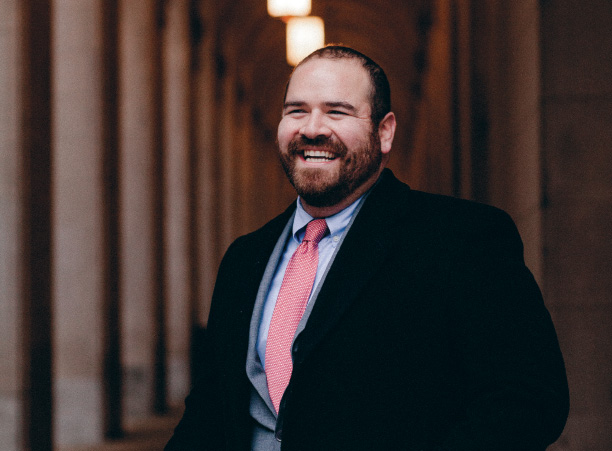
 When Jason Hernandez ’07 arrived on Mount St. James in fall 2003, he wasn’t sure what he wanted to major in or which career he might be interested in after graduation. But he did know, he says, that he wanted to learn how to live well.
“I decided I would spend time figuring out what I wanted my life to be about, so I majored in philosophy,” he says. “Holy Cross was a great place to experiment with what leadership meant, and thinking about things that you saw and wanted to change.”
These days, living well for Hernandez means serving as an immigration attorney, leading the Rutgers Immigrant Community Assistance Project (RICAP) at Rutgers, the State University of New Jersey.
Hernandez grew up on Long Island, New York, where his father was an immigrant from Guatemala who ran a food truck business. But he says his path to immigration law isn’t as simple as the son of an immigrant wanting to help others in similar situations. His desire grew out of questions about justice, equality and the legal system, first piqued at Holy Cross as a member of SPUD, the Latin American Student Organization and the Student Government Association and, later, as a volunteer with the Jesuit Volunteer Corps in West Los Angeles after graduation. He worked at Chrysalis, an organization that helps people reenter the workforce after homelessness, incarceration or substance abuse problems.
“I found that work fulfilling in many ways, but it was tough, too. I would assist people in finding employment, and then maybe the background check would reveal some additional information and the employer would let them go. Then they would ask me what they could do or if they had any rights,” he says. “It got me thinking about social justice and how the legal system isn’t equal for all.”
Hernandez decided to enroll in law school at Temple University in Philadelphia, where a fellowship at HIAS Pennsylvania turned into a full-time job. He worked at the nonprofit, which helps immigrants and refugees navigate U.S. immigration, for five and a half years.
When Hernandez saw that Rutgers was creating an office to assist immigrants on campus, he jumped at the chance to get involved. He estimates that the school is one of two or three universities on the East Coast that has created dedicated, full-time attorney positions to specifically represent immigrant and undocumented students in immigration matters. New Jersey has offered in-state tuition rates to students who are not U.S. citizens since 2015; in 2018, it expanded to offer financial aid as well, which has increased the population of undocumented students on the university’s three campuses across the state.
Hernandez says Rutgers created his position and the RICAP because of this change, coupled with the anti-immigration policies implemented by the Trump administration. In particular, students expressed distress over the uncertain future of the country’s undocumented youth and the Deferred Action for Childhood Arrivals (DACA) program. DACA provided work permits and deportation protection to eligible immigrant youth who came to the U.S. when they were children, which enabled them to obtain jobs and apply to college.