Holy Cross Alumni Form Grassroots Anti-Racism Alliance

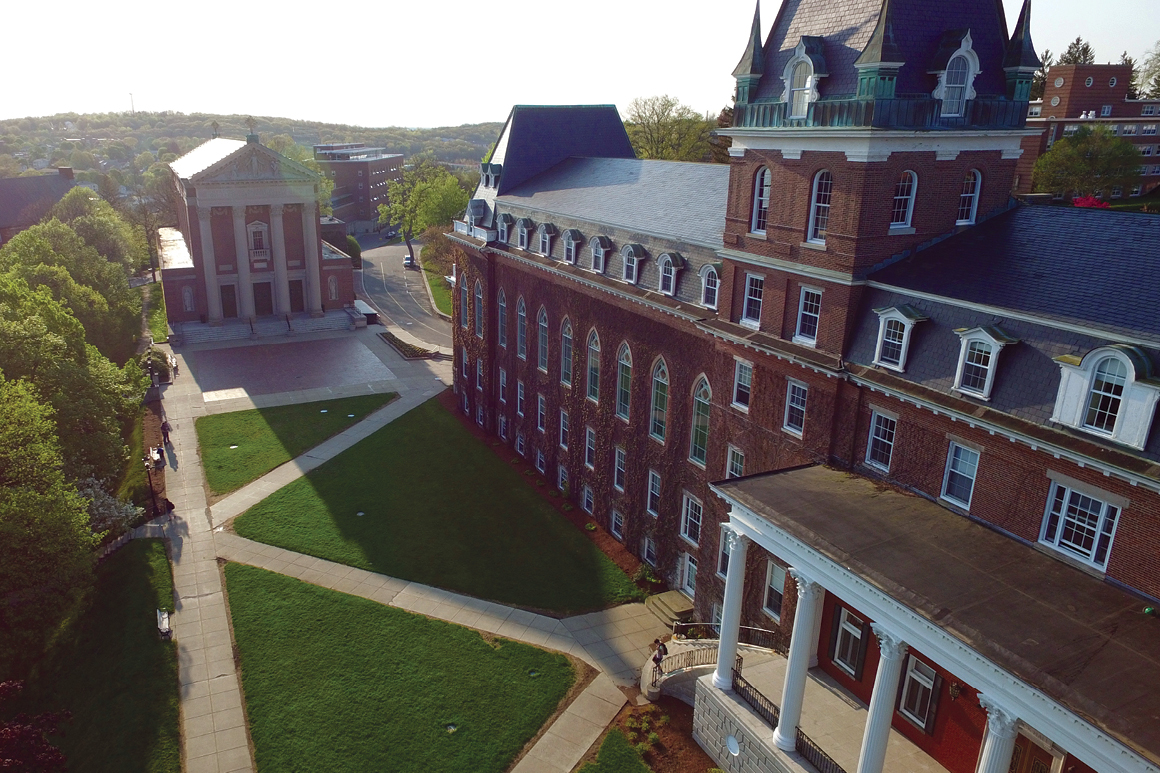
Aerial photo of Holy Cross' Fenwick Hall with St. Joseph Memorial Chapel in the background

In the wake of George Floyd’s murder last year and ensuing protests against police brutality across the United States, Maria Amendolia ’92 reached out to her classmate Fred Givens. Her intention was clear: She didn’t want Givens, a Black man, to educate her; she just wanted to start a conversation. The pair pulled in fellow Holy Cross friends and gathered virtually to talk about what was unfolding throughout the country. The confluence of police violence, social and political unrest, and the pandemic set the stage for the dialogue. “It was kind of the perfect storm,” Givens says.

Following the conversation, Amendolia posted in the Holy Cross Class of 1992 Facebook group, sparking interest from fellow alumni, whom she invited to the next call. From there, the group has grown organically into what is now known as the Holy Cross Anti-Racism Alliance. Consisting of more than 90 members across class years rooted in their Jesuit education and tradition, the group convenes each month to engage in dialogue, education and action. The alliance’s mission is to foster education through meaningful connections and conversations about racial justice, to improve the experience of students of color on campus, and to promote a safe and supportive campus by eliminating barriers caused by systemic racism.

The meeting structure varies month-to-month: Sometimes the alliance will invite a guest speaker, at others they will bring a topic to the table and then break out into small groups to discuss in a more intimate setting. For the December 2020 meeting, Kona Khasu ’92 invited his friend Will Calhoun, drummer in the Black metal rock band Living Colour, to serve as a guest speaker. During the call, Calhoun shared his experiences both growing up in the Bronx and traveling the world as a musician. On another call, the alliance invited African-American members of the Class of 2020 to talk about their lived experiences at Holy Cross.

“I think that was a powerful moment that turned some eyes,” Givens says. The conversation with recent graduates was also an important conduit for shared learning across class years, adds Len deMontagnac ’92: “[They] are enlightening us as much as us being enlightened by each other.”

While the conversations may feel raw and uncomfortable at times, they are an important means to examine the experiences that people of color live every day in America. For many, the alliance is also a space to acknowledge their own complacency when it comes to issues of race and how they have benefitted from their white privilege.

“I think these conversations have created an opportunity for us to come to terms with the fact that racism is our problem as white people. It is not something for those who have been oppressed to solve,” Amendolia emphasizes. “As an example, during one of our recent calls, we posed questions to the group and asked: ‘How do you feel about your white privilege? What does that mean to you? Are you willing to own that? And then what are you going to do with it to improve the situation in your neighborhood, your family, your country, our alma mater?’ All of those things.”

While the calls are a forum for education and dialogue, they are also intended to be a springboard to action. The alliance wants to avoid becoming an echo chamber and instead translate what members learn into their everyday lives — whether it be in the workplace, with friends or at home.

“This group is using all of the information, the knowledge and the skills you learn from academia to do something real about it,” Givens says. Beyond that, the group endeavors to heed what they’re hearing during these dialogues and take action to positively impact students of color at Holy Cross — an objective they have already moved toward on multiple fronts.

In December 2020, the group raised $10,000 in three weeks for the Bishop Healy Emergency Support Fund, which directly supports students of color at Holy Cross. The group has also assembled a list of alumni mentors — 15 people and growing — to serve as a resource for students of color who are in need of advice, support or simply a listening ear. This is particularly important for students who may be reticent to reach out to alumni or who don’t know what resources exist to help them with personal and professional development, organizers say.

A key denominator for the members is their desire to unite around their love for Holy Cross by living out the Jesuit charge of being “men and women for and with others.”

“I think the core of who we are, we reach back into Holy Cross,” deMontagnac says. “What motivates me with this group and a lot of my friends from Holy Cross, is there is an innate commitment to serve and promote justice across the board. There is a commitment to speaking out when you witness a false justice, when you witness something wrong.” By uniting alumni across class years and geographic locations, the alliance seeks to have a meaningful impact on students at Holy Cross and beyond.

“This alliance is a prime example of how our alumni continue to learn, grow and live the mission long after their graduation at Holy Cross,” says Amit Taneja, the College’s associate provost for diversity, equity and inclusion. “This group exemplifies how we are never too late to come to a difficult conversation and to seek ways to work across divides.”

Taneja says he is grateful for the work of the alumni in creating tangible support for today’s students: “More than anything else the alliance gives me hope that we can, in fact, address systemic racism together.”

Down the line, the group hopes to be more integrated in conversations about structural changes at the College and organize an on-campus student and alumni event when it’s safe to gather in person. “This is organically done, and when we speak, we move, and we act. And it’s that spirit in which we operate that makes us so powerful,” says Phyllis Jones ’95.

For more information on participating in the Holy Cross Alumni Anti-Racism Alliance, email info@CHARA1843.com.

Written by Mary Cunningham ’17 for the Spring 2021 issue of Holy Cross Magazine.

About Holy Cross Magazine
Holy Cross Magazine (HCM) is the quarterly alumni publication of the College of the Holy Cross. The award-winning publication is mailed to alumni and friends of the College and includes intriguing profiles, make-you-think features, alumni news, exclusive photos and more. Visit magazine.holycross.edu/about to contact HCM, submit alumni class notes, milestones, or letters to the editor.
Posted in Alumni, Holy Cross Magazine, News, Spring 2021 | Comments Off on Holy Cross Alumni Form Grassroots Anti-Racism Alliance

Alicia Molt-West ’09 Traces Her Path from Mount St. James to the White House

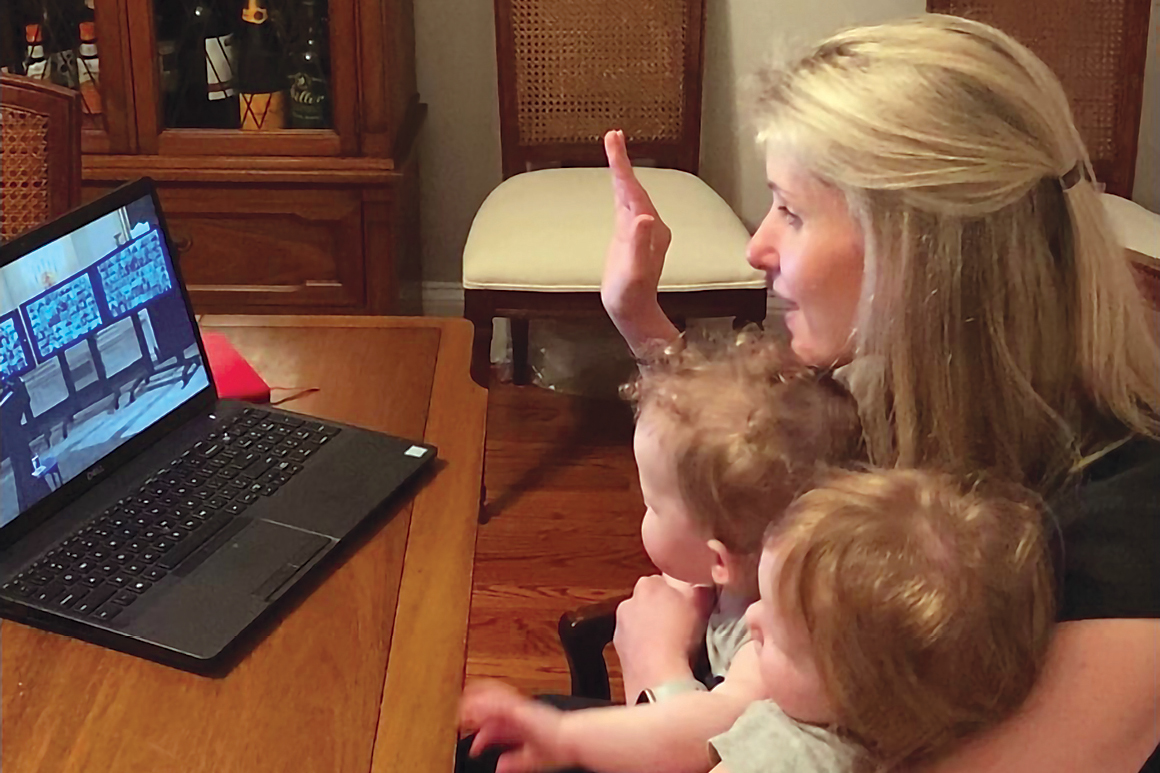
Alicia Molt-West takes her oath of office via computer, with her twin daughters seated on her lap

Due to pandemic precautions, Alicia Molt-West ’09 takes her oath of office, administered virtually by President Joe Biden on Inauguration Day 2021, at home with her twin daughters, Charlotte and Grace, on her lap.

Whenever Alicia Molt-West ’09 returned home for the holidays after graduating from Holy Cross, she’d make a breakfast or lunch date with her former history professor and friend, Stephanie Yuhl.

Posted in Alumni, Gender, Sexuality, and Women's Studies, History, Holy Cross Magazine, News, Political Science, Spring 2021 | Comments Off on Alicia Molt-West ’09 Traces Her Path from Mount St. James to the White House

Holy Cross Driver, Student Bond Over Quest for U.S. Citizenship

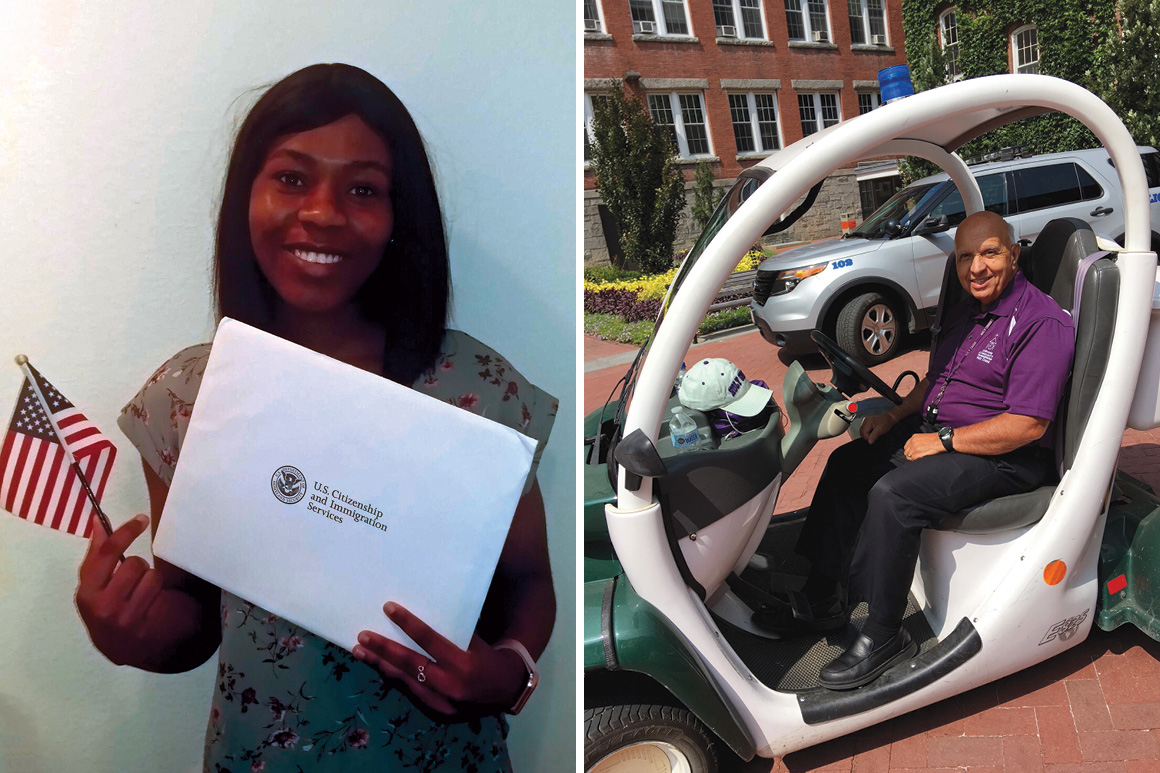
Josephine Kalondji ’23 (left) and Tony Alfama (above right)

Josephine Kalondji ’23 applied for U.S. citizenship a few weeks before she arrived at Holy Cross in August 2019, but she didn’t consider one important detail.

Posted in Holy Cross Magazine, Mathematics and Computer Science, News, Religious Studies, Spring 2021 | Comments Off on Holy Cross Driver, Student Bond Over Quest for U.S. Citizenship

Four Faculty Members Promoted to Associate Professor With Tenure

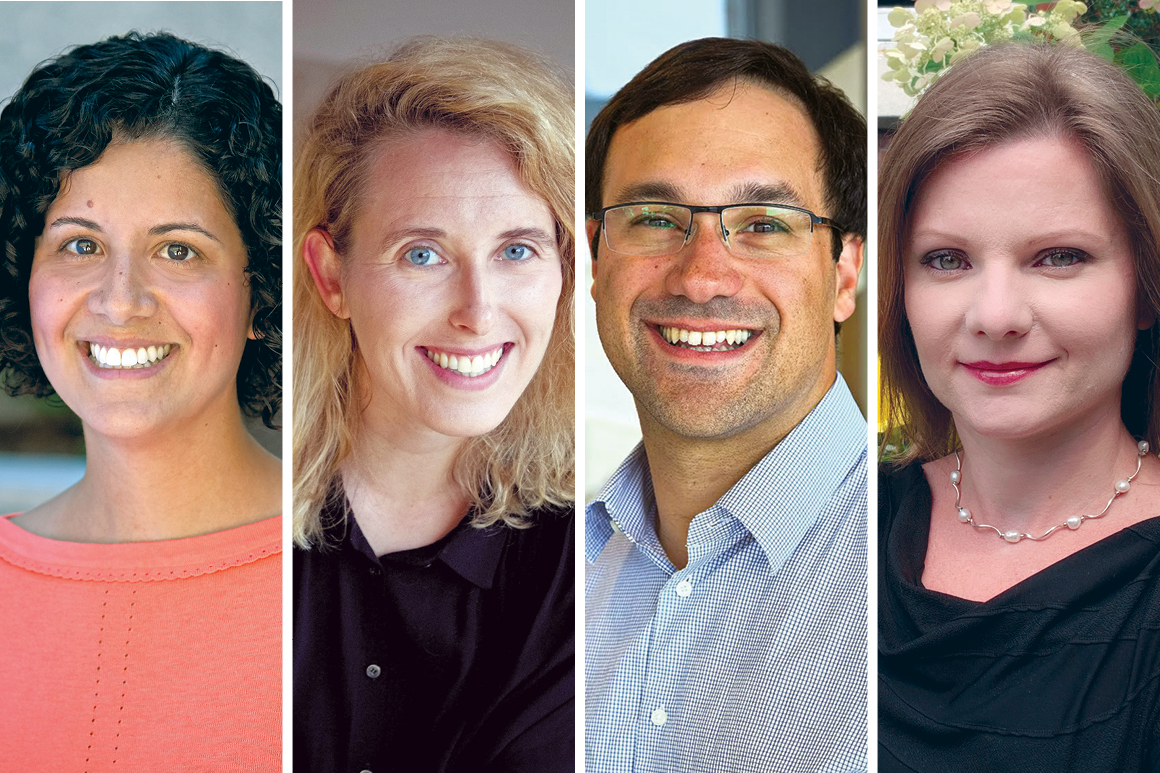
From left to right: L. Gaby Avila-Bront; Melissa Schoenberger; Daniel Tortorice; Olena Staveley-O'Carroll

From left to right: L. Gaby Avila-Bront; Melissa Schoenberger; Daniel Tortorice; Olena Staveley-O’Carroll

Whether researching 18th-century British literature or economic fluctuations and asset pricing, Holy Cross faculty members are making significant, lasting impacts on their fields. Learn more about the four recently promoted faculty members from the departments of chemistry, English and economics and accounting.

Posted in Chemistry, Economics and Accounting, English, Holy Cross Magazine, News, Spring 2021 | Comments Off on Four Faculty Members Promoted to Associate Professor With Tenure

Students Share What It Was Like Living Through the Pandemic at an Empty Holy Cross

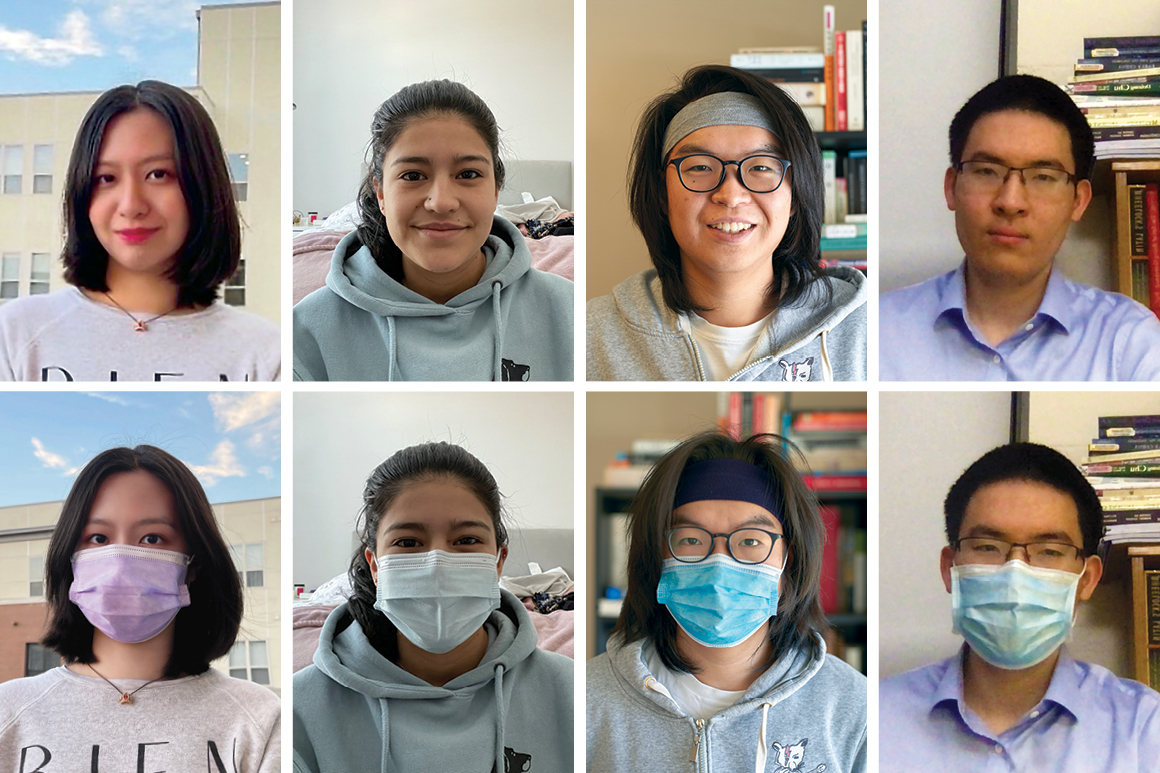
From left to right: Xinmeng (Brenda) Duan ’22, Claudia Davila ’20, Zicong (Chris) Li ’21 and Jinze Mi ’23.

From left to right: Xinmeng (Brenda) Duan ’22, Claudia Davila ’20, Zicong (Chris) Li ’21 and Jinze Mi ’23.

Nearly all Holy Cross alumni have experienced life on a bustling campus, from noisy, packed dining spaces to hilly paths teeming with foot traffic. But when the pandemic forced students to return to their homes last March, a small group of mostly international students remained on The Hill for six months, experiencing a Holy Cross like no other in its long history.

“[For international students,] there’s a lot of adjustment that goes on, even in a ‘normal year,'” says Christina (Tina) Bi Chen, assistant dean of international students. She notes that the culture shock that comes with living in a new environment can leave students feeling even farther from home: “It’s everything from ‘Can you get your favorite candy or your favorite comfort foods?’ to ‘When you look out your window, does it look like a completely alien place?'”

Chen, known as “Dean Tina” to students, says that despite the challenges, she sees international students thrive across all majors, programs and activities at Holy Cross — in many cases, while speaking their second language.

Last March, international students faced a new hurdle: daunting barriers to returning home, ranging from getting travel authorizations to navigating travel restrictions. “There is a lot to think about — you don’t just pack up and leave,” Chen says.

More than 60 international students were ultimately unable to make it home to their families, prompting Holy Cross to offer them the option of continuing their on-campus room and board — something Chen notes not all higher-ed institutions immediately offered at the time. She credits a team of “unsung heroes” from multiple College offices and divisions with making it all work, especially chef Linda Jesse and Neil Domina, assistant director of residential dining; Ed Coolbaugh, assistant dean of students and director of residence life and housing; and Ryan Grant, senior associate director of residence life and housing. Major transitional projects included moving students into two-bedroom apartments in Figge Hall, each with its own full kitchen, living room, dining area and bathroom; surveying students on their food preferences then converting Kimball Dining Hall into a fully stocked “grocery store;” gathering rice cookers, pots and pans for use in the students’ kitchens; and much more.

By St. Patrick’s Day, Mount St. James, normally home to about 3,000 students and 1,000 employees, was empty, save for the students who would soon move to Figge, the Jesuit community, two construction crews and a handful of employees from departments such as public safety, dining services and facilities. It would remain that way for the next six months.

Posted in Arthistory, Asian Studies, History, Holy Cross Magazine, News, Philosophy, Psychology, Religious Studies, Spring 2021 | Comments Off on Students Share What It Was Like Living Through the Pandemic at an Empty Holy Cross

New Holy Cross Course Examines the Science and Politics of Pandemics

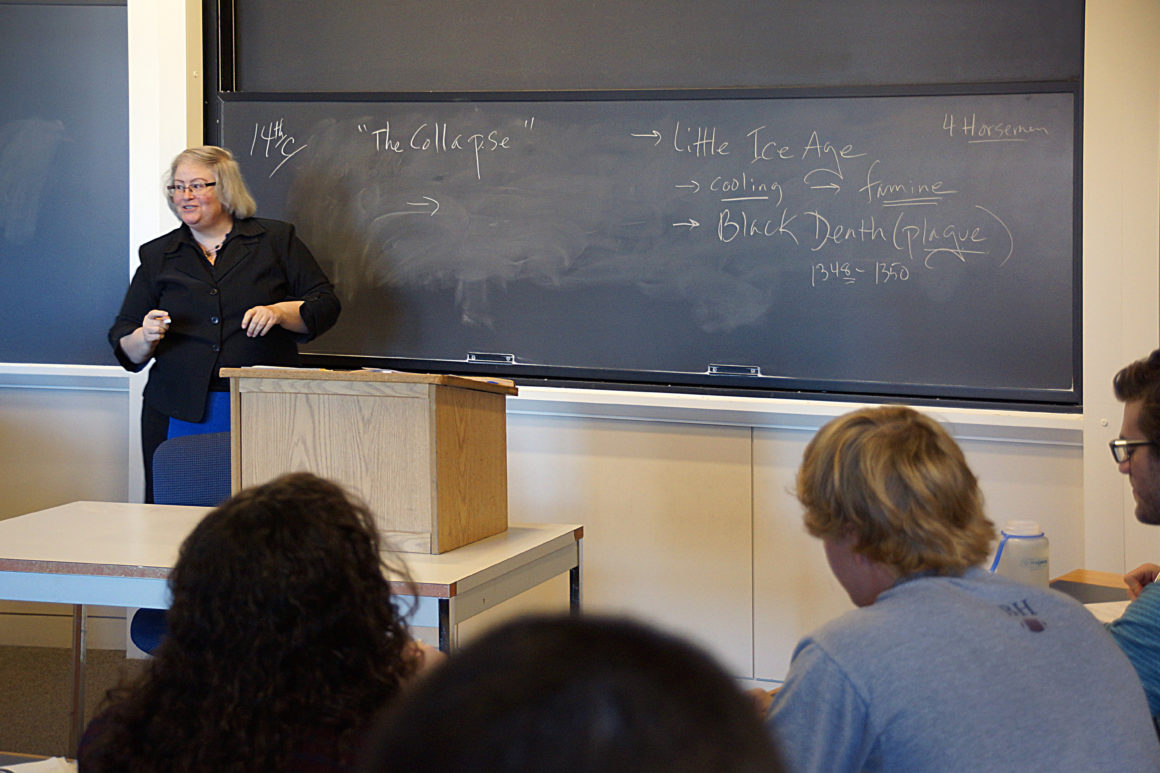
screenshot of class on zoom

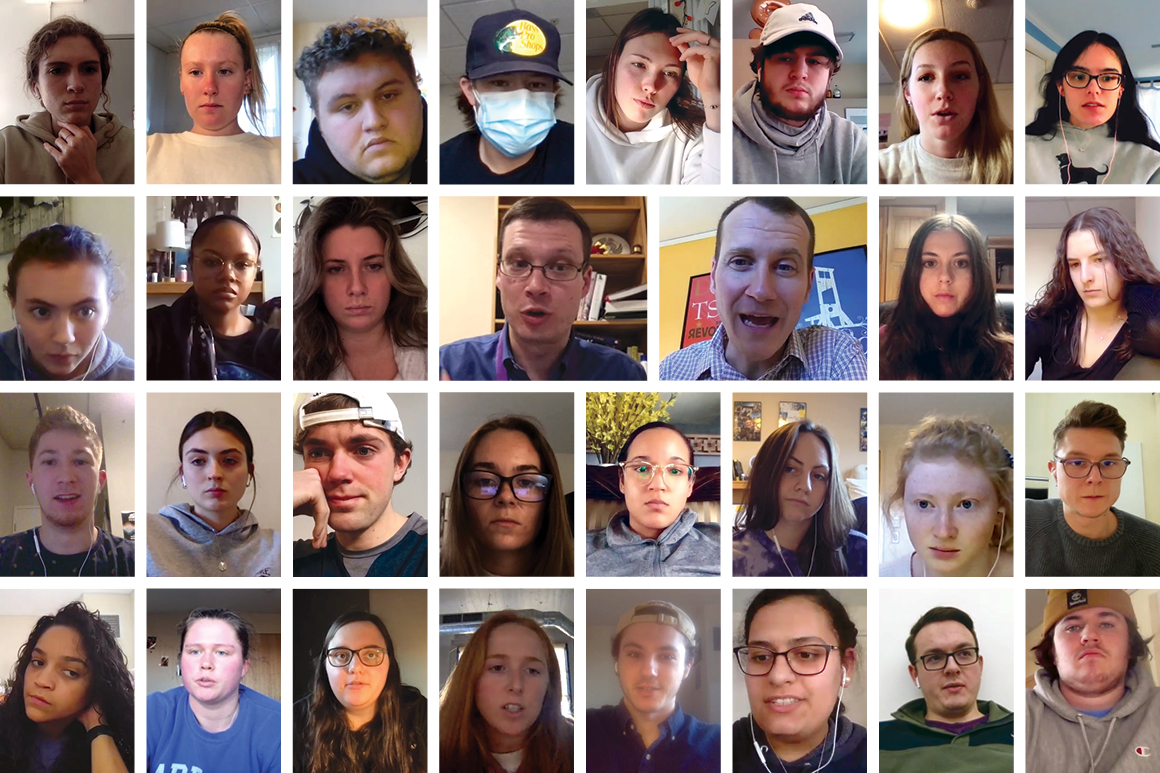
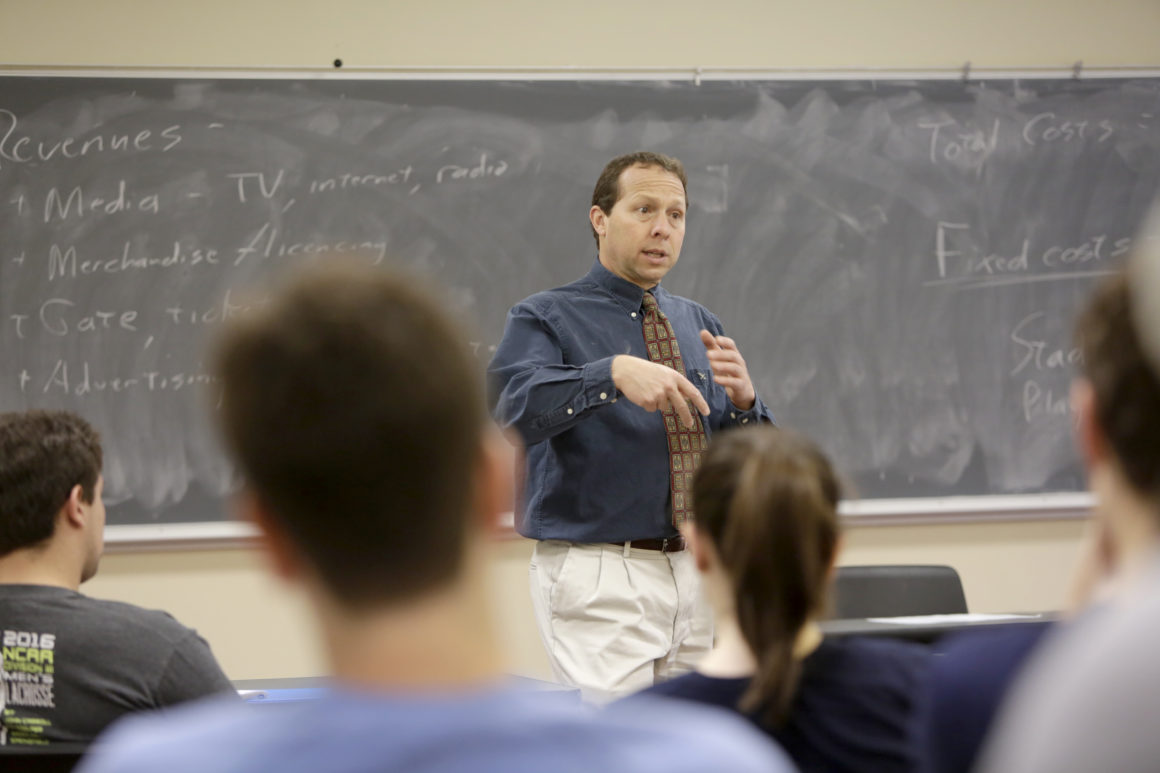
Nearly 30 students gathered on a March Zoom call to learn about the biological workings and political impact of a global pandemic, in today’s class, the HIV/AIDS virus. It’s nearly a year to the day since Gov. Charlie Baker locked down Massachusetts due to the COVID-19 outbreak, a milestone that is not lost on teaching team Geoff Findlay, associate professor of biology, and Denis Kennedy, associate professor of political science. This new interdisciplinary course, “Pandemic Policy: The Science and Politics of COVID-19,” is their way of helping students in real time grasp how global pandemics are impacted by an understanding of science and public policy.

“It’s been a rare opportunity to teach about pandemics during a pandemic,” Kennedy notes, adding the shared experience has made the enthusiasm among the students “palpable.”

Each topic is set up as a yin and yang: A disease is introduced by Findlay, who tracks its origins, pathology and treatments; then Kennedy walks through the political and public policy reaction. Halfway through the semester, the class has covered the Black Death (bubonic plague), cholera and the so-called Spanish influenza. In today’s class, the HIV/AIDS pandemic is examined from a geographical point of view, focusing on how South Africa and the political and cultural climate of the 1980s and 1990s enabled the disease’s rapid spread.

Kennedy engages the class in a discussion about the role of race, exclusion and political power in battling HIV/AIDS in that region. For instance, as one student points out, government-enforced segregation and mass relocation policies created economic and health disparities, especially among women, an issue addressed by their required reading of Frank M. Snowden’s “Epidemics and Society.”

The team-taught course is the brainchild of Findlay, who developed the idea at the conclusion of his recent research sabbatical. He partnered with Kennedy, a friend and colleague since they arrived at Holy Cross in 2013, to teach students that “the most effective solutions for big problems like a global pandemic will require integrating approaches from different academic areas,” Findlay says. Later in the course, students will study COVID-19 in detail and then, as a project, make recommendations for how different governments should respond.

“Policy choices in a pandemic can be informed by an understanding of the biology of the infectious agent and possible treatments,” Findlay says, adding that “scientists need to consider how their findings and recommendations will be heard by the public and policy makers, and tailor them accordingly without compromising scientific accuracy or integrity.”

The intersection between science and politics is what caught the attention of biology major Andrew Ludwig ’21. He has already learned that the two perspectives are inextricably linked and that “the public and political responses to each disease are shaped by the pathogen itself.”

Eliza Caldwell ’22, a political science major, says she feels similarly and that she selected the course to learn more about “the potential that COVID-19 has to permanently alter life in the U.S.” She says she is most surprised so far by how much of a lasting effect historic global pandemics have had and how those effects are still visible today. “While these diseases might not threaten our lives like they once did, they still nonetheless are shaping them,” she notes.

Findlay expects this intertwining of biology and policy considerations to continue when the class examines COVID-19. For example, when discussing vaccines, topics will include how vaccines work biologically; what types of vaccines can be most effectively distributed in different countries; what mechanisms exist for getting vaccines to developing countries; and how, biologically and politically, wealthier countries benefit from helping developing countries gain access to vaccines.

“This class has taught me more about the coronavirus itself, where it comes from and what it does to the human body,” Caldwell says. “I feel like most of the population has neglected to learn more about the science of the coronavirus, but learning about the biology of the disease makes understanding the national security policies it begets so much clearer.”

Coronavirus may become an annually circulating threat, akin to how influenza now behaves, which will make it a topic for years to come and keep the class in demand, Findlay says. He hopes the class will “inspire colleagues to think creatively about other ideas for team-taught multidisciplinary classes.”

Adds Kennedy: “Geoff and I have been able to learn from each other and the class has certainly prompted me to reflect on things I’ve taken for granted, from assignment design to the concepts I introduce in class.”

Course Catalog

CISS 299

Pandemic Policy: The Science and Politics of COVID-19

PROFESSOR

Geoff Findlay and Denis Kennedy

DEPARTMENTS

Biology and Political Science

DESCRIPTION

This course investigates the scientific and political factors that have shaped responses to the COVID-19 pandemic. The professors establish the biological, historical and institutional context for pandemic response, tracing the development of epidemiology and public health mechanisms through cases including the Black Death (bubonic plague), cholera, the 1918 influenza pandemic, HIV/AIDS and Ebola. The course also addresses the evolution, sources of authority and impact of international cooperative mechanisms like the World Health Organization and nongovernmental organizations. COVID-19 is then studied from a biological perspective, providing the class the scientific understanding to make recommendations about ideal public health guidelines. Those recommendations are then compared to responses pursued by national and international actors, and their implications for future pandemic response.

MEETING TIMES

Tuesday and Thursday

3:15 PM – 4:30 PM

CLASSROOM

Zoom

REQUIRED READING

  • “Epidemics and Society: From the Black Death to the Present,” Frank M. Snowden, Yale University Press, 2019
  • “Pandemics: A Very Short Introduction,” Christian W. McMillen, Oxford University Press, 2016
  • “Crisis in the Red Zone: The Story of the Deadliest Ebola Outbreak in History, and of the Outbreaks to Come,” Richard Preston, Random House, 2019

ASSIGNMENTS

  • Readings
  • Group presentation and infographic introducing a biological cause of a major pandemic
  • Midterm exam
  • Short analysis paper on the country’s COVID-19 response
  • Individual research project on the politics or science of pandemics

GRADES

  • Class attendance and participation
  • Quizzes
  • Midterm exam
  • Group project, individual project and short paper

PREREQUISITES

POLS 103 or POLS 102 or BIOL 161 or permission of the instructors

ABOUT THE PROFESSORS

  • Geoff Findlay, associate professor of biology, earned a B.A. in biology from Carleton College and a Ph.D. in genome sciences from the University of Washington. His research is in the area of evolutionary genetics, with a particular focus on the origins and functions of reproductive proteins. His lab is currently funded by a National Science Foundation CAREER award. He has been a member of the Holy Cross faculty since 2013.
  • Denis Kennedy, associate professor of political science, earned a B.A. in international relations, political science, and French from Bucknell University and a Ph.D. in international relations from the University of Minnesota. His publications have addressed topics including nonprofit governance and accountability, multilateral cooperation, and humanitarian imagery. He has been a member of the Holy Cross faculty since 2013.

Written by Sandra Gittlen for the Spring 2021 issue of Holy Cross Magazine.

About Holy Cross Magazine
Holy Cross Magazine (HCM) is the quarterly alumni publication of the College of the Holy Cross. The award-winning publication is mailed to alumni and friends of the College and includes intriguing profiles, make-you-think features, alumni news, exclusive photos and more. Visit magazine.holycross.edu/about to contact HCM, submit alumni class notes, milestones, or letters to the editor.
Posted in Biology, Holy Cross Magazine, News, Political Science, Spring 2021 | Comments Off on New Holy Cross Course Examines the Science and Politics of Pandemics

Is Going Test-Optional a Game Changer for College Admissions? Holy Cross Admissions Director Talks About the College’s Bold Decision To Make the Switch In 2005

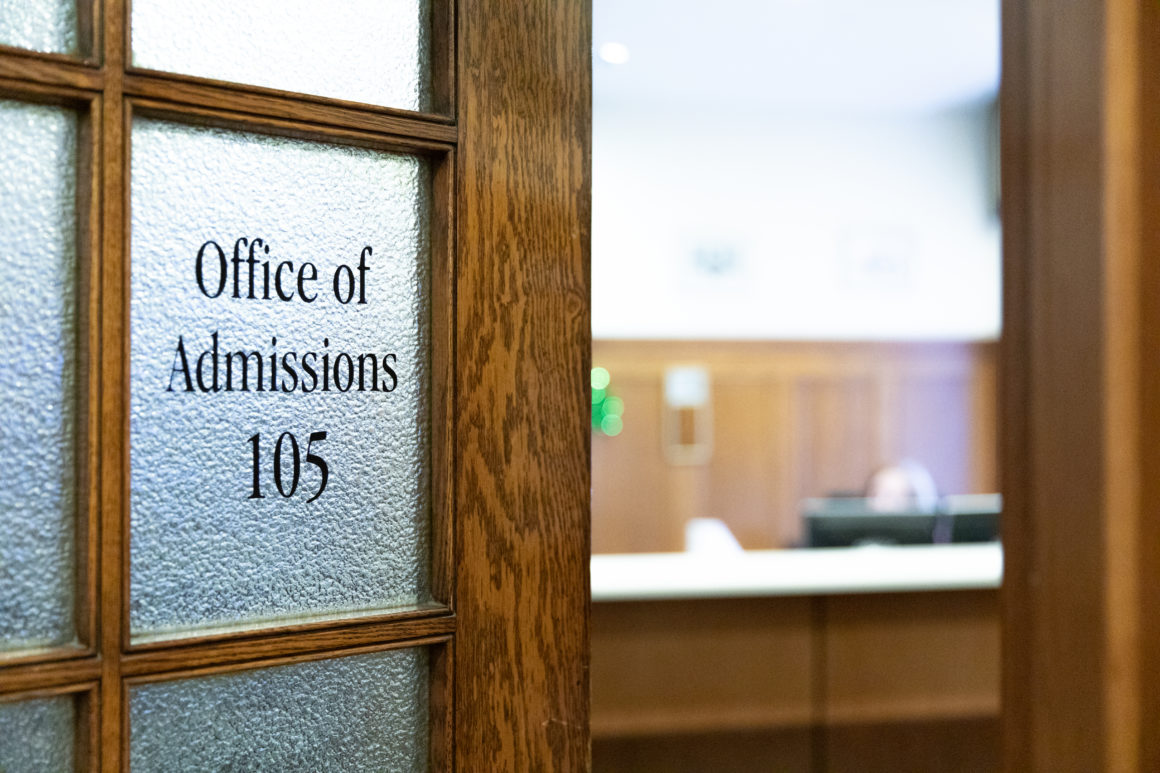
Admissions office door. Photo by Avanell Chang

Photo by Avanell Chang

Central Massachusetts colleges and universities are increasingly following a national trend of suspending the use of standardized test scores in evaluating applicants, in an effort to diversify their student bodies. What does that mean for applicants?

Ann McDermott ’79, director of admissions at Holy Cross since 1994, told the Worcester Business Journal in a recent interview that this is a welcomed change. Since Holy Cross became one of the first five colleges nationally to make standardized test scores an optional part of the admissions process back in 2005, McDermott and her team have long thought students applying to college were typically better academically than their test scores would show. 

According to McDermott, standardized tests, such as the SAT or ACT, are not a good indicator of how likely it is for a student to be successful in college, and—most importantly—can lead to inequality concerns at a time when many colleges are seeking to create and promote opportunities for first-generation college students or those from disadvantaged backgrounds.

For McDermott, the 2005 decision reflected the College’s highly personalized admissions practices, which already de-emphasized standardized test scores and focused instead on a prospective student’s overall portfolio of academic experience. 

“Once we went forward [with the decision to go test-optional], it was sort of liberating,” said McDermott.

To read the entire article, go to WBJournal.com.

Related Information:

Posted in Alumni, In The News, News | Comments Off on Is Going Test-Optional a Game Changer for College Admissions? Holy Cross Admissions Director Talks About the College’s Bold Decision To Make the Switch In 2005

Can We Breathe Easy After Getting the COVID-19 Vaccine? Holy Cross Biology Professor and Virologist Weighs In

Ann Sheehy, professor of biology. Photo by Tom Rettig

Ann Sheehy, professor of biology. Photo by Tom Rettig

As the first people to get vaccinated are approaching the four-month post-inoculation mark, there are still some unknowns with respect to just how long we can breathe easy after getting the vaccine. And also, should we be concerned about the new variants? 

In an interview with The Wall Street Journal, Ann Sheehy, virologist and professor of biology at the College of the Holy Cross, explains what we need to know about getting vaccinated for COVID-19, from side effects to effectiveness against the variants.

According to Sheehy, whose research focuses on the cellular immune response to retroviruses, experiencing post-vaccination side effects is generally a good thing, as it’s a signal that your immune system is at work. 

The opposite is not valid, however. “Just because you don’t feel sick does not mean you didn’t generate a robust immune response,” Sheehy says.

And in regards to the vaccines’ effectiveness on the new variants, Sheehy points out that it’s possible for a variant to reduce a vaccine’s protection, but not entirely eliminate it.

“If someone does get COVID-19 despite being vaccinated, the illness would likely be less severe. The immune system is very clever. The second time you see something, you often do better with it,” says  Sheehy.

To read the article, go to WSJ.com.

Posted in Biology, In The News, News | Comments Off on Can We Breathe Easy After Getting the COVID-19 Vaccine? Holy Cross Biology Professor and Virologist Weighs In

Holy Cross Economics Professor Says Vaccine Distribution Is Key to Restoring Economic Stability in the U.S.

Joshua Congdon-Hohman, associate professor of economics. Photo by Tom Rettig

Joshua Congdon-Hohman, associate professor of economics. Photo by Tom Rettig

Which U.S. states’ workforces are experiencing the quickest recovery from COVID-19 and how is vaccine distribution affecting the job market’s ability to recover? 

Joshua Congdon-Hohman, associate professor of economics at Holy Cross specializing in labor economics, was recently interviewed by WalletHub on this matter, for a report comparing the 50 states and the District of Columbia based on changes in unemployment claims.

According to Congdon-Hohman, in order to have a better understanding of the health of the labor market it is important to examine “other labor market measures like extended definitions of unemployment, the labor force participation rate and the employment-to-population ratio” and not just the headline unemployment rate. 

Congdon-Hohman also believes that efficient vaccine distribution is essential to the economy’s ability to recover. “Vaccine distribution is the key to a full recovery in the service industry, which is a significant portion of the U.S. economy,” says Congdon-Hohman. “Even as states relax restrictions, the economy will not truly begin to flourish until people have confidence that it is safe to return to their activities from their pre-pandemic lives.”

To read the full article, go to WalletHub.com.

Posted in Economics and Accounting, In The News, News | Comments Off on Holy Cross Economics Professor Says Vaccine Distribution Is Key to Restoring Economic Stability in the U.S.

Holy Cross Graduates Report Strong Outcomes After Graduation Despite Pandemic

Despite the ongoing international pandemic and recent recession due to coronavirus, a recent survey of the graduates of the class of 2020 shows strong outcomes for Holy Cross graduates in securing job offers, internships and graduate program acceptances across the country. In a snapshot of outcomes for the class of 2020 with 83% of graduates responding, a considerable 94% of respondents are employed full-time in a job or internship, engaged in service work or pursuing a graduate degree.

Posted in News | Comments Off on Holy Cross Graduates Report Strong Outcomes After Graduation Despite Pandemic

Removal Of All-Star Game to Cost Georgia Tourism $100M? Not Likely, Holy Cross Economics Professor Says

Victor Matheson, professor of economics. Photo by Tom Rettig

Victor Matheson, professor of economics. Photo by Tom Rettig

Officials in the state of Georgia say Major League Baseball’s decision to move the All-Star Game from Atlanta, in protest of the state’s controversial new voting law, will cost local businesses close to $100M. But is that a realistic estimate?

The Guardian recently sought the insight of Victor Matheson, professor of economics at Holy Cross and a renowned sports economist, on this issue. Matheson, who has done extensive research on the economic impact of large scale sporting events on the host cities, believes that typically the real economic impact is a “fraction of the numbers that were predicted ahead of time.”

“The rule of thumb that I always tell everyone is just take whatever number the boosters are telling you, move the decimal one place to the left and you’ve probably got a pretty good guess,” says Matheson. “There’s no real reason that you should believe economic impact numbers that are commissioned by people who are made to look good by big economic impact numbers.”

To read the full article, go to TheGuardian.com.

Posted in Economics and Accounting, In The News, News | Comments Off on Removal Of All-Star Game to Cost Georgia Tourism $100M? Not Likely, Holy Cross Economics Professor Says

New Student Health Ambassadors Group Provides Peer-to-Peer Resources

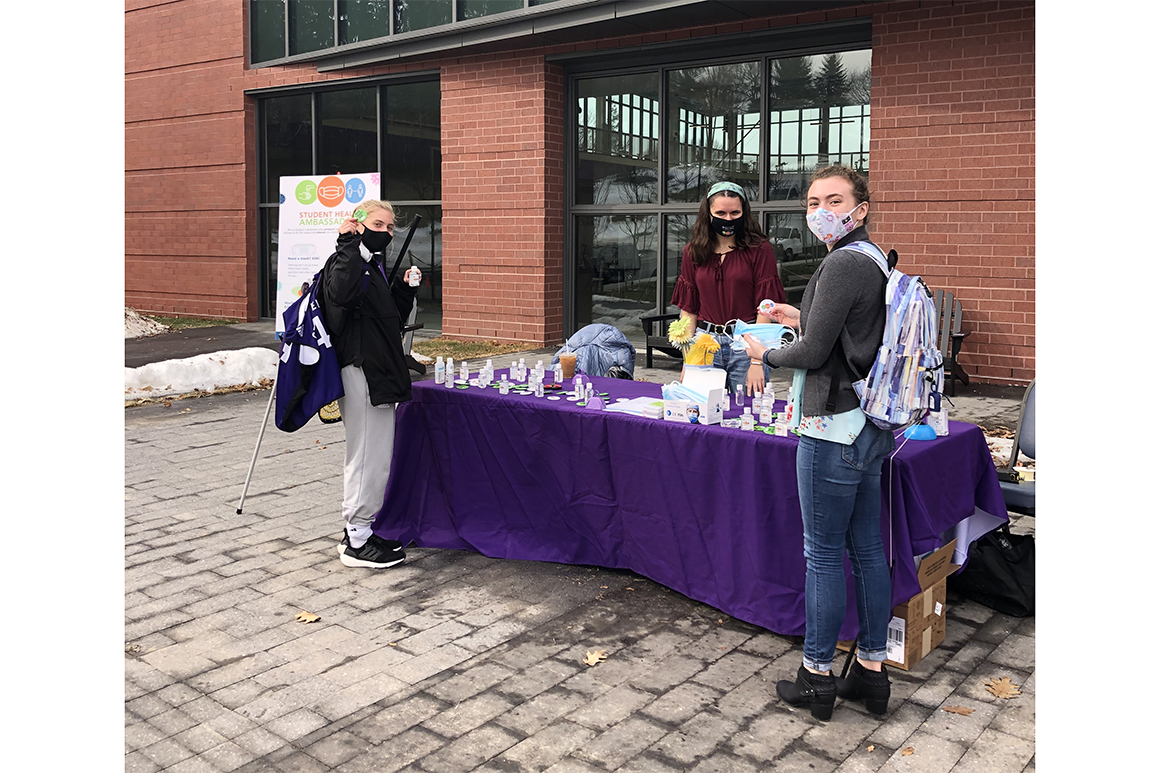
Student Health Ambassadors set up in front of the Jo.

Student Health Ambassadors set up in front of the Jo.

A playlist of pop and dance songs, from Nick Jonas to Britney Spears, reverberated through the speaker on a table outside “The Jo,” as the Joanne Chouinard-Luth Recreation and Wellness Center is known. It was the second week of March, and as students queued up for their twice-weekly required COVID-19 tests, several of their peers staffed that table representing the Student Health Ambassadors group. They handed out masks and hand sanitizer, raffled off a Fitbit and kept the playlist upbeat.

Posted in Biology, Classics, Health Professions Advising, News, Psychology, Russian Studies | Comments Off on New Student Health Ambassadors Group Provides Peer-to-Peer Resources

Ambassador Linda Thomas-Greenfield, United States Representative to the United Nations, to Deliver 2021 Holy Cross Commencement Address

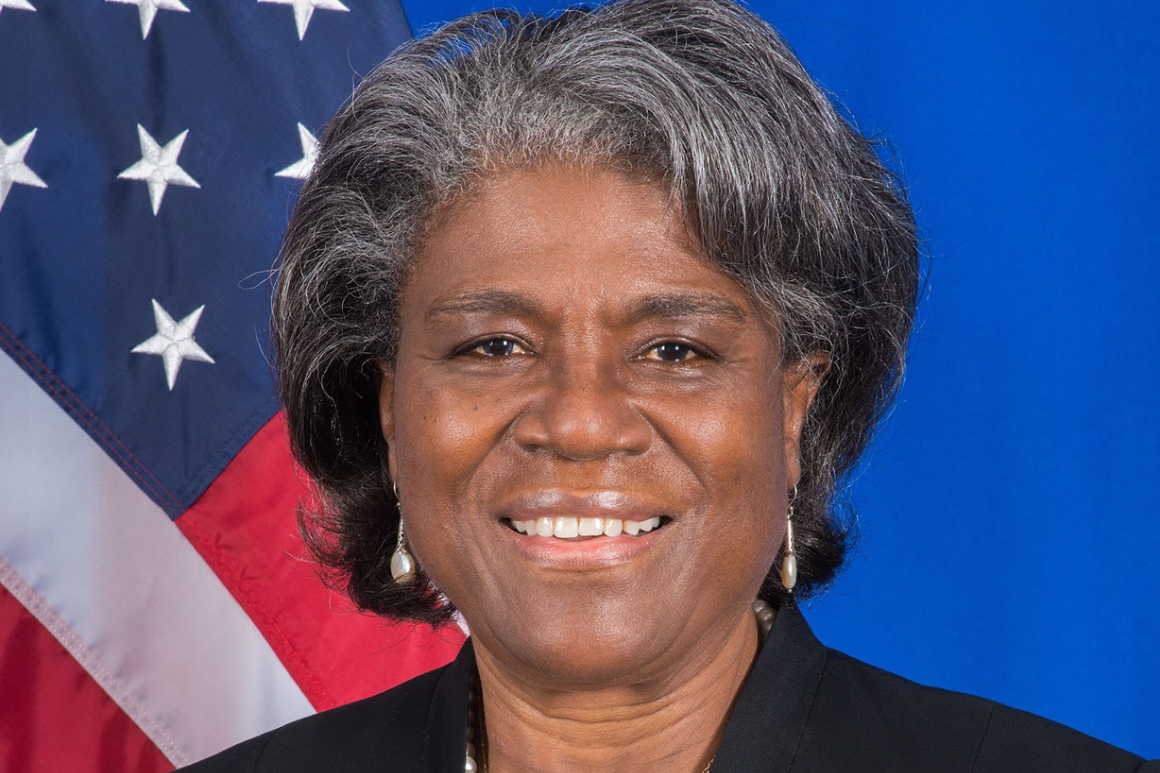
Ambassador Linda Thomas-Greenfield, Representative of the United States of America to the United Nations

Ambassador Linda Thomas-Greenfield, Representative of the United States of America to the United Nations

Holy Cross will host an in-person commencement ceremony this May, featuring an address by Ambassador Linda Thomas-Greenfield, Representative of the United States of America to the United Nations. This year’s commencement marks the College’s 175th graduating class. The commencement ceremony will be held Friday, May 21 on the College’s Fitton Field – as well as livestreamed – with Ambassador Thomas-Greenfield’s address delivered virtually.

Ambassador Thomas-Greenfield, a career diplomat, returned to public service in February 2021 when she was sworn into her new role by the Vice President of the United States. She had retired from a 35-year career with the U.S. Foreign Service in 2017. From 2013 to 2017 she served as the Assistant Secretary of State for African Affairs, where she led the bureau focused on the development and management of U.S. policy toward sub-Saharan Africa. Prior to this appointment, in 2012 and 2013, she served as Director General of the Foreign Service and Director of Human Resources, leading a team in charge of the State Department’s 70,000-strong workforce.

Ambassador Thomas-Greenfield’s distinguished Foreign Service career includes an ambassadorship to Liberia, and postings in Switzerland (at the United States Mission to the United Nations, Geneva), Pakistan, Kenya, The Gambia, Nigeria and Jamaica. In Washington, she served as Principal Deputy Assistant Secretary of the Bureau of African Affairs from 2006 to 2008, and as Deputy Assistant Secretary of the Bureau of Population, Refugees, and Migration from 2004 to 2006.

After retiring from the U.S. State Department in 2017, Ambassador Thomas-Greenfield led the Africa Practice at Albright Stonebridge Group, a strategic commercial diplomacy firm chaired by former Secretary of State Madeleine Albright. She was also the inaugural Distinguished Resident Fellow in African Studies at the Institute for the Study of Diplomacy at Georgetown University from fall 2017 to spring 2019.

Ambassador Thomas-Greenfield was the 2017 recipient of University of Minnesota Hubert Humphrey Public Leadership Award, the 2015 recipient of the Bishop John T. Walker Distinguished Humanitarian Service Award and the 2000 recipient of the Warren Christopher Award for Outstanding Achievement in Global Affairs. 

Ambassador Thomas-Greenfield holds a bachelor’s degree from Louisiana State University and a master’s degree from the University of Wisconsin, where she also did work towards a doctorate. 

Ambassador Thomas-Greenfield will be given an honorary degree during Commencement. The College will also award honorary degrees to the following individuals during the ceremony: Dr. Michael Collins ’77, Chancellor of the University of Massachusetts Medical School, Reverend David Beckmann, one of the foremost U.S. advocates for people struggling with hunger and poverty in the United States and around the world, and Sister Donna Markham, president of Catholic Charities USA. 

In addition to Ambassador Thomas-Greenfield’s commencement address, Dr. Collins will offer a reflection for Class of 2021 graduates on May 21, and both Rev. Beckmann and Sister Markham will speak during a special virtual Convocation event for the graduating Class of 2020 on May 22.

Dr. Michael Collins ’77 is chancellor of the University of Massachusetts Medical School and senior vice president for the health sciences for the University of Massachusetts. As the chief executive of UMass Medical School, Dr. Collins oversees a $1 billion academic health sciences center that includes three graduate schools; a $400 million research enterprise; Commonwealth Medicine, the medical school’s health care consulting and operations division; and MassBiologics of UMMS, the nation’s only nonprofit, university-based FDA-licensed discoverer and manufacturer of vaccines and other biologics. Over his fourteen-year tenure as chancellor, Dr. Collins has been an engaged and effective leader for the higher education and Central Massachusetts communities. During the ongoing COVID-19 pandemic, he has supported important public health initiatives, including the creation of the UMass Medical School Vaccine Corps, which has recruited more than 6,400 volunteers to support Massachusetts’ vaccination campaign and the equitable distribution of COVID-19 vaccines. Prior to joining the university, Dr. Collins served as president and chief executive officer of the Massachusetts-based Caritas Christi Health Care System from 1994 to 2004. An alumnus and former board chair of the College of Holy Cross and a graduate of Tufts University School of Medicine, Dr. Collins is board-certified in internal medicine. He is a tenured professor of medicine and population and quantitative health sciences at UMass Medical School and a Fellow of the American College of Physicians.

Rev. David Beckmann is president emeritus of Bread for the World, a non-partisan Christian advocacy organization that advocates for policy changes to end hunger, where he led broad and successful campaigns for legislation to reduce hunger in the United States and around the world. He was awarded the World Food Prize in 2010 for helping to reduce world hunger. Rev. Beckmann is currently Coordinator of the Circle of Protection, an advocacy coalition of Christian church bodies and organizations who together have 100 million members. He is also a joint fellow of the University of California, Berkeley’s Goldman School of Public Policy and the Graduate Theological Union. From 1991 to 2020, Beckmann was president of Bread for the World and its two affiliates, Bread for the World Institute and the Alliance to End Hunger. Prior to that, from 1976 to 1991, he was an economist at the World Bank, where he worked on urban poverty projects and led the Bank’s initial engagement with civil society around the world. He has authored numerous books on faith, economics, and politics, including “Exodus from Hunger.” Rev. Beckmann has earned degrees from Yale, the Lutheran School of Theology in Chicago, and the London School of Economics, as well as eight honorary doctorates.

Sister Donna Markham is the president of Catholic Charities USA (CCUSA), the national office for Catholic Charities agencies nationwide. CCUSA’s members provide help and create hope for more than 13 million people a year regardless of religious, social or economic backgrounds. Sister Donna, an Adrian Dominican sister and board certified clinical psychologist with a doctorate in clinical psychology, is the first female president to lead CCUSA in the organization’s 110-year history. A widely-recognized author and speaker, she wrote “Spiritlinking Leadership: Working Through Resistance to Organizational Change” and has held faculty positions at St. John’s Provincial Seminary in Michigan and the Kellogg School of Management at Northwestern University. Prior to joining CCUSA in 2015, Sister Donna served as president of the Behavioral Health Institute for Mercy Health, where she led the transformation of the delivery of behavioral health services across the seven major geographic regions of the system. Prior to joining Mercy Health, Sister Donna served 10 years as the president of the Southdown Institute in Ontario, Canada and as Prioress of the Adrian Dominican Congregation. She also served for eight years as a member of CCUSA’s Board of Trustees, two of which as Board chair. Sister Donna received her doctorate from the University of Detroit and was named a Fellow in the American Association of Clinical Psychologists. She was awarded the prestigious Harold S. Bernard Training Award from the American Group Psychotherapy Association.

For more information on this year’s Commencement events, please visit the Commencement website.

Posted in News, Press Release | Comments Off on Ambassador Linda Thomas-Greenfield, United States Representative to the United Nations, to Deliver 2021 Holy Cross Commencement Address

Religious Studies Professor Explains the Intricacies Behind the Good Friday Catholic Worship Services

Joanne Pierce, professor of religious studies. Photo by John Buckingham

Joanne Pierce, professor of religious studies. Photo by John Buckingham

Did you know that Easter is the earliest and most central of all Christian holidays—more ancient than Christmas—and that the Good Friday worship service is historically the most controversial of Holy Week services? 

In an article for The Conversation, Joanne Pierce, professor of religious studies at Holy Cross who specializes in Christian liturgy, details the ceremonial elements of the Catholic worship services for Good Friday and explains the important changes they have undergone throughout time. 

“Prayers and symbols have the power to bind people together in a common purpose and identity,” says Pierce. “But without understanding their context, it is all too easy to manipulate them in support of dated or limited political and social agendas.”

To read the full article, go to TheConversation.com. 

Posted in In The News, News, Religious Studies | Comments Off on Religious Studies Professor Explains the Intricacies Behind the Good Friday Catholic Worship Services

Will MLB Bounce Back in 2021? Holy Cross Sports Economics Professor Says This Is a ‘Critical’ Moment

Victor Matheson, professor of economics. Photo by Tom Rettig

Victor Matheson, professor of economics. Photo by Tom Rettig

As Major League Baseball is preparing for Opening Day this week and fans are looking forward to a return to regular-season games for the first time in 18 months, economists are wondering if MLB will be able to bounce back from the revenue loss of the past two seasons due to coronavirus. 

Victor Matheson, professor of economics at Holy Cross and one of the foremost sports economists in the country, was asked by Reuters to weigh in on the complex issue. 

“Sports operate on the entire idea of getting people addicted to their product,” Matheson said. “The question is whether, you know, a year or 18 months or two years has allowed you to kick that addiction, and whether people actually say, ‘Yeah, you know what? I’m not sure I’m ever going back in the same way I did before.'”

According to Matheson, this is a “critical point” for MLB, which fared worse than the National Basketball Association, the National Hockey League and the National Football League over the last 12 months, with MLB’s revenue plummeting by more than $6 billion between 2019 and 2020.

To read the full article, go to Reuters.com.

Posted in Economics and Accounting, In The News, News | Comments Off on Will MLB Bounce Back in 2021? Holy Cross Sports Economics Professor Says This Is a ‘Critical’ Moment

Holy Cross Student Project Documenting the Pandemic Featured on GBH’s ‘In It Together’

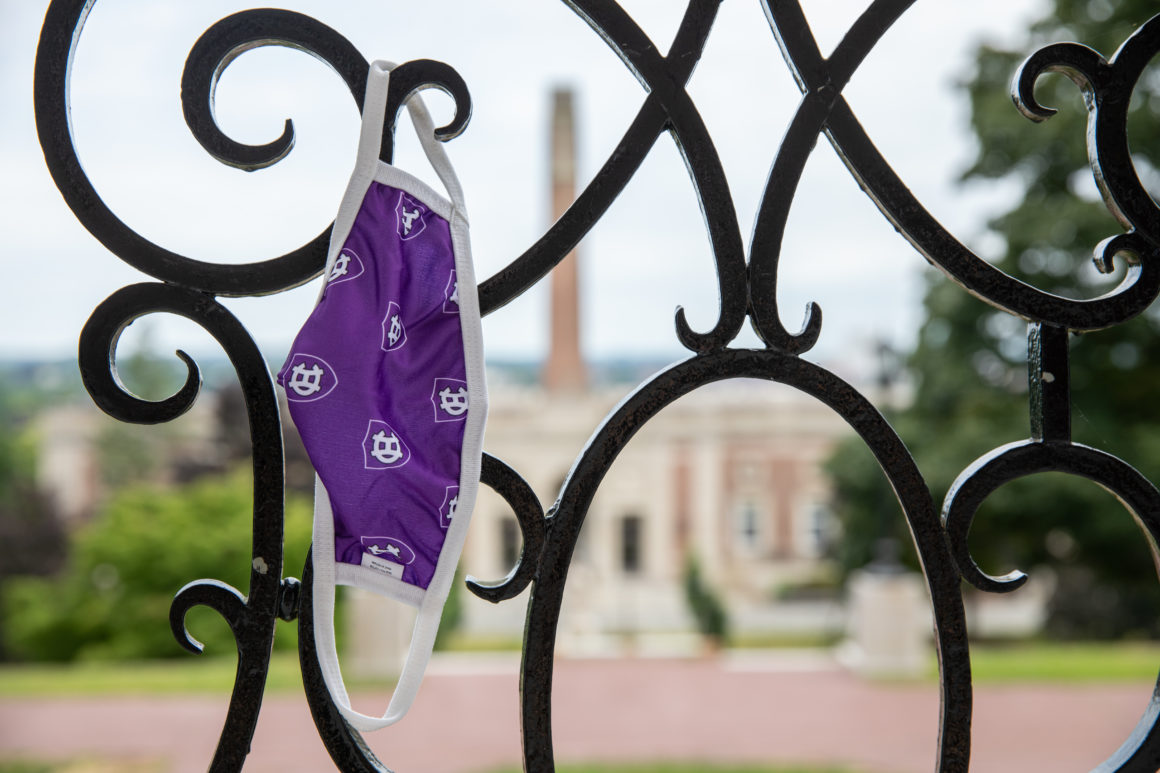
HC mask. Photo by Avanell Chang

Photo by Avanell Chang

Last spring, a group of 12 Holy Cross students launched “COVID Chronicles,” a project seeking to document on- and off-campus life during the pandemic. Under the guidance of history professors Cynthia Hooper and Lorelle Semley, the students gathered information, oral histories and visual media.

Now, a year after the initial coronavirus outbreak, the project and its digital archive were featured on GBH’s “In It Together” segment. Host Arun Rath had high praise for the three interviewed students, Elle Kearns ’22, Helena Connell ’22 and Sienna Ablorh ’21, referring to their takes on the complex issues researched as simply “brilliant.”

And with an additional $6,000 grant from the College’s Committee on Faculty Scholarship allowing the project to continue through the summer, six students—located in Athens, Oxford, Washington, D.C. and Worcester—will continue their work to refine and redesign the digital archive.

To commemorate an extraordinary year, the COVID Chronicles team has launched two challenges, both aiming to collect content in the form of an image or a reflection that depicts an aspect of the pandemic-era experience. They encourage members of the Holy Cross community and beyond—including alumni, family members, and anyone interested in this project—to submit materials.

Submissions will be posted on the digital archive website as they come in, and three winning entries will be selected for each category after the deadline of April 19, for a total of $1,000 in cash prizes.

To listen to the segment, visit WGBH.org. To participate in the challenges, visit COVIDChronicles.holycross.edu.

Related Information:

Posted in History, In The News, News | Comments Off on Holy Cross Student Project Documenting the Pandemic Featured on GBH’s ‘In It Together’

Blog: Ruiz ’23 Looks Forward to Meeting New People and Exploring New Places

Veronica Ruiz '23

Veronica Ruiz ’23

Name: Veronica Ruiz

Hometown: Chicago, Illinois

Studies She’s Considering: Double major in Spanish and Anthropology, Concentration in Latinx Studies

Why She Chose Holy Cross: I choose Holy Cross because of the small class sizes and student body population. Not only that, but when I visited Holy Cross for Visions, I fell in love with the campus and everyone was so welcoming.

Activities: The Spire and Spud

What She’s Most Looking Forward To: I’m most looking forward to studying abroad, or doing the New York Semester program. Not only that, but exploring Worcester and Boston throughout my time at Holy Cross and continuing to meet new people.

Why She’s Blogging: I’m blogging to document my own experiences at Holy Cross, in hopes to look back at my time here someday, as well as to provide insight to incoming or prospective students as to what life is really like at Holy Cross.

Read Veronica’s blog.

Check out our other online journals at me.holycross.edu.

Posted in Latin American, Latinx, and Caribbean Studies, News, Sociology and Anthropology, Spanish | Comments Off on Blog: Ruiz ’23 Looks Forward to Meeting New People and Exploring New Places

Holy Cross Receives First-Gen Forward Designation

First-Gen Forward Designation badge

Holy Cross has been designated a First-gen Forward institution by the Center for First-generation Student Success, an initiative of NASPA–Student Affairs Administrators in Higher Education and The Suder Foundation. The First-gen Forward designation recognizes higher education institutions that demonstrate a commitment to improving experiences and advancing outcomes of first-generation college students.

“Joining First-gen Forward both honors the work we have been doing to support first-generation students at Holy Cross to achieve their greatest goals, and gives us access to additional tools and resources to improve our efforts. I am grateful to NASPA and The Suder Foundation for this opportunity to join this community of learners and serve our students better,” said Michele Murray, vice president for student affairs and dean of students at Holy Cross.

The College of the Holy Cross has had a long-standing commitment to promoting success and retention of first-generation students. The recently launched data dashboard shows that first-generation college students are typically graduating at very high rates (over 90%). In-depth advising, faculty and staff support, peer mentor programs and a recently launched first-gen website have been essential for the success of first-generation students. The College also recently joined the American Talent Initiative to fortify its commitments and contributions to increasing the number of first-generation college students by 50,000 nationally.

“The Center is so pleased to welcome College of the Holy Cross into the 2021-22 First-gen Forward cohort. Through the application process, it was evident that Holy Cross is not only taking steps to serve first-generation students, but is prepared to make a long-term commitment and employ strategies that foster an environment of success for this important population,” said Dr. Sarah E. Whitley, assistant vice president at the Center for First-generation Student Success.

As a First-gen Forward Institution, interested faculty and staff will have multiple opportunities to engage with peer institutions who are also creating environments that improve the experiences and outcomes of first-generation students. Selected institutions will send representatives to the First-gen Forward Workshop slated for early June and will participate in monthly phone calls, virtual professional development, goal setting, blog development, annual reporting and more. After two successful years in the program, institutions are eligible to apply for the Advisory leadership designation.

“I feel privileged to be a part of so many brilliant students’ journeys here at Holy Cross and in particular those who are blazing a new trail for their families in being the first to attend college,” said Amie Archambault, assistant director in the Office of Multicultural Education at Holy Cross and the lead for the FirstGen Forward cohort at the College.

To learn more about first-generation efforts at College of the Holy Cross, visit holycross.edu/first-generation-students. To learn more about the Center for First-generation Student Success, visit firstgen.naspa.org.

Related Information:

Posted in In The News, News | Comments Off on Holy Cross Receives First-Gen Forward Designation

Religious Studies Professor Urges President Biden and Congress to ‘Care For Our Common Home’

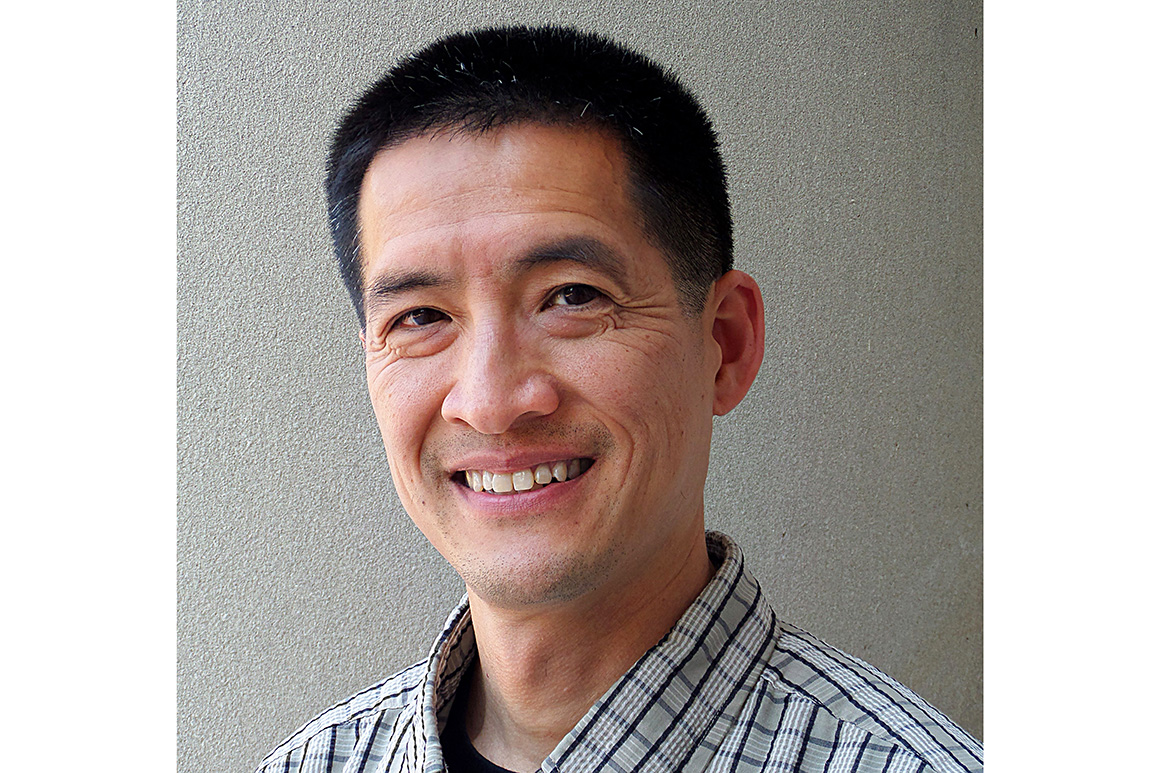
Headshot of Tat-siong Benny Liew.

Tat-siong Benny Liew. Photo by John Buckingham.

Tat-siong Benny Liew, the Class of 1956 Professor in New Testament Studies and professor of religious studies at the College of the Holy Cross, recently penned a letter addressed to president Biden, vice president Harris, and members of Congress as part of the “American Values, Religious Voices: 100 Days, 100 Letters” campaign. The national, nonpartisan campaign seeks to bring together scholars from a diverse range of religious traditions to write on shared American values and pressing issues of the day. Liew, who wrote about the importance of safeguarding the environment and “protecting our common home,” also participated in the project four years ago during the transition to the Trump administration.

Read the full letter on valuesandvoices.com.

Posted in In The News, News, Religious Studies | Comments Off on Religious Studies Professor Urges President Biden and Congress to ‘Care For Our Common Home’

Holy Cross Religious Studies Professor Analyzes Case for Military Chaplain’s Sainthood

Joanne Pierce, professor of religious studies. Photo by John Buckingham

Joanne Pierce, professor of religious studies. Photo by John Buckingham

In early Christianity, soldiers could be baptized only if they refused to kill another human – today, Father Emil Kapaun, a U.S. Army chaplain and a war hero, is being considered a candidate for sainthood by the Catholic Church.

In an article for The Conversation, Joanne Pierce, professor of religious studies at Holy Cross and a scholar of medieval liturgy and worship, traces the connection between military bravery and spiritual heroism throughout the centuries. 

According to Pierce, although “it might seem unusual to associate priestly ministry with the violence of war,” there has been a long history of religious figures accompanying armies to the battlefield.

“For many Catholics, Kapaun’s selfless actions during combat and imprisonment would demonstrate extraordinary heroism, not just in fighting the armed enemies, but also in what the Vatican calls ‘offering of one’s life’ for other human beings,” says Pierce.

To read the full article, go to TheConversation.com. 

Posted in In The News, News, Religious Studies | Comments Off on Holy Cross Religious Studies Professor Analyzes Case for Military Chaplain’s Sainthood