
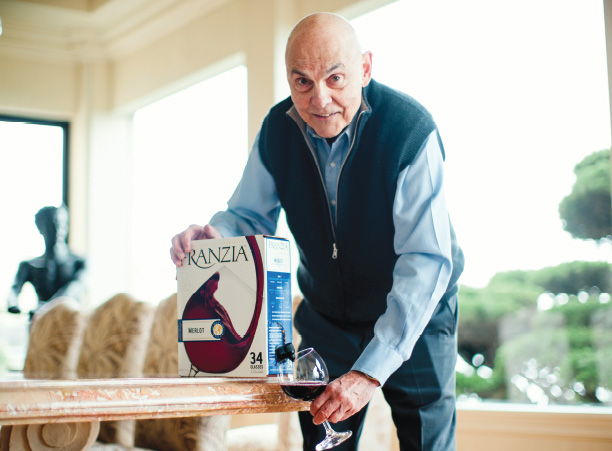
 Before tech startups flocked to Silicon Valley, before entrepreneurs competed for millions in funding on the TV show “Shark Tank,” and before entrepreneurship was part of the cultural zeitgeist in the U.S., Arthur “Art” Ciocca ’59 saw entrepreneurship as the future of business.
When he started his family foundation, the Arthur and Carlyse Ciocca Charitable Foundation, Ciocca focused on providing entrepreneurship training and opportunities for college students, with hopes of equipping the next generation of business leaders with the practical skills to succeed and the ethical foundation to do so in a way that adds the most value to society.
Each of these decisions is rooted in his personal philosophy of “thinking like an owner,” honed at early jobs where he saw management and higher-ups make decisions he didn’t support.
“I would put myself in the owner’s shoes and ask myself what I would do if it were me in those situations. That was a turning point for me, where I knew I wanted to control my own destiny and chart a course around a lot of the obstacles I had learned about in these experiences,” he says. “Entrepreneurship offered the best opportunity for me to control my own destiny and create maximum value.”
For example: When Coca-Cola wanted to get out of the alcohol business in 1981, Ciocca took a risk and bought the wine division, growing it into The Wine Group, the country’s second-largest wine company by sales volume. Today, The Wine Group is famous for brands like Franzia, Cupcake Vineyards and Benzinger Family Winery — and its unique, management-owned structure. Unlike other large companies, it is privately owned and accountable to the employees, rather than outsiders.
When The Wine Group’s competitors had a cost advantage because they self-manufactured their own bottles, Ciocca led a team that decided to do away with glass bottles entirely. Putting Franzia in that now-famous box with the image of wine pouring into a glass was a disruptive innovation that converted a disadvantage into a huge advantage. It offered Franzia consumers the best value in wine and provided dramatic shelf presence that made it easy to find. In addition, it offered many consumer conveniences. It was easier to pour and store and kept wine fresher longer (after opening); it also provided huge barriers to entry for competitors. As a result, Franzia became the largest wine brand in the industry, a position it has held for years.