Holy Cross Ranks Eighth in the U.S. for Alumni Giving

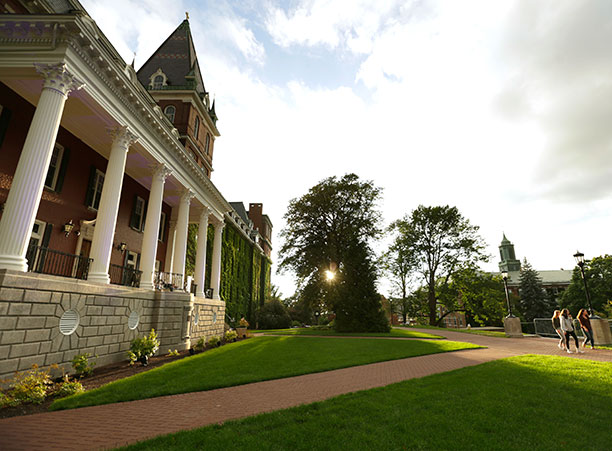
Students walk in front of Fenwick HallCollege of the Holy Cross has been ranked eighth in the nation for its alumni participation in giving, according to a recent report from U.S. News & World Report, based on the data roughly 1,100 universities submitted to the media company.

“We are grateful and proud,” said Tracy Barlok, the College’s vice president for advancement, “but not entirely surprised. Our alumni are extraordinarily generous. They’re passionate about Holy Cross and deeply invested in our mission. We are conscious of how blessed we are and we never take this kind of support for granted. We have a thriving relationship with our alumni, who tell us they feel a need to give back for the experience they had as undergraduates at Holy Cross.”

According to the report, Holy Cross is among schools like Princeton University, Williams College, Amherst College and Bowdoin College, with eight of the 10 institutions being liberal arts colleges.

Holy Cross has built a tradition of annual giving, and in 2017, for the eleventh consecutive year, alumni gave at a rate of 50 percent or more, based on Holy Cross methodology also commonly used at colleges across the country to rate alumni giving participation. U.S. News & World Report, which uses a different methodology, puts Holy Cross at 46.1 percent. According to the report, the average rate for alumni contributions among the institutions included in the U.S. News & World Report’s data is 11.1 percent.

Read more about the ranking at U.S. News & World Report.

Related Information

Posted in In The News, News | Comments Off on Holy Cross Ranks Eighth in the U.S. for Alumni Giving

Holy Cross Economics Professor Is Sought-After Expert on Sports Gambling

Victor Matheson, professor of economics

Victor Matheson, professor of economics

With the recent announcement that Governor Charlie Baker is proposing the legalization of sports gambling in Massachusetts, media looking for expert opinion on the issue are turning to Holy Cross professor of economics Victor Matheson.

In an interview with the Boston Herald, Matheson, who in addition to being a stadium financing expert has done extensive research into sports gambling, doesn’t estimate large revenue earnings from the current proposal to legalize sports gambling. Instead Matheson says, “Expanded gaming into places like small sports parlors around the state, things like 7 Eleven’s or things like bars, then we could have really a lot of impact.”

On the flipside, Matheson cautions that sports gambling may be uniquely addictive to certain groups of people, especially young men. The advice he shared with Boston 25 News? “Feel free to do this for a couple years and lose the couple thousand dollars you’re going to lose, and understand at some point you’ve got to walk away.”

Related Coverage:

Posted in Economics and Accounting, In The News, News | Comments Off on Holy Cross Economics Professor Is Sought-After Expert on Sports Gambling

Mellon Foundation Grant to Support Holy Cross Professors’ Research into LGBTQ+, Refugee Communities in Worcester

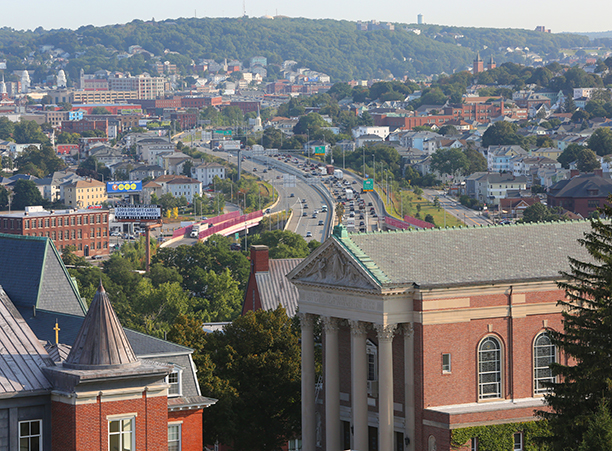
City of Worcester seen here from the Holy Cross campus. Photo by Tom Rettig

City of Worcester seen here from the Holy Cross campus. Photo by Tom Rettig

The College of the Holy Cross announced the two inaugural recipients of the “Scholarship in Action” grants for the 2018-2019 academic year. The awarded projects focus on professors’ work in collaboration with community groups on the study of refugee resettlement and LGBTQ+ history in Worcester, while providing rich experiential learning opportunities for Holy Cross students.

Sponsored by an $800,000 grant from The Andrew W. Mellon Foundation, Scholarship in Action supports community-based faculty research projects in the City of Worcester. Over the course of five years, Holy Cross faculty, students and community partners will engage in diverse projects showcasing the significant role that the liberal arts, and the humanities in particular, can play in nurturing civic engagement and partnership.

“Through Scholarship in Action we want to build upon and deepen existing College commitments within the city by finding ways to align the scholarly interests and creative energy of our faculty and students with the needs of the local community,” said Holy Cross Provost Margaret Freije. “We encourage community partners and civic leaders to consider Holy Cross as both a resource and a motivated partner in serving the Worcester community.”

Susan Rodgers, professor emerita of anthropology, and Stephanie Yuhl, professor of history, are the inaugural Scholarship in Action recipients, with the grants enabling the following research projects in the city.

In collaboration with the Worcester Refugee Assistance Project and with the Refugee Artisans of Worcester, Susan Rodgers’ “Refugee Resettlement in Worcester” project entails an anthropological ethnography about how refugees from Burma, Bhutan and several African nations are making new lives for themselves in Worcester. Rodgers and Holy Cross student researchers are conducting interviews with refugees ages 18 to 70, about various aspects of their resettlement journeys. Additionally, an exhibition of refugees’ crafts is planned for early 2020 at the Worcester Center for Crafts.

“The Scholarship in Action grant has been instrumental in furthering my collaboration with the Worcester Refugee Assistance Program, the Refugee Artisans of Worcester, and the Worcester Center for Crafts, not only to assist some of our city’s new refugees with the complex resettlement endeavor, but also to document their new home-making experiences,” said Susan Rodgers, professor emerita of anthropology. “In this historical moment of divisive rhetorics about refugees, I believe it’s important to listen to Worcester’s refugees tell their own stories about their lives and journeys to America.”

Stephanie Yuhl is partnering with the Worcester Historical Museum and representatives from local organizations (including Worcester Pride, AIDS Project Worcester, and the Worcester Boys and Girls Club) to direct “From Margin to Center,” a three-year project aimed at developing an historical archive and oral history and artifact collection of LGBTQ+-related materials in Worcester County. Drawing on the discoveries from this grassroots effort at historical consciousness-raising in the community, Yuhl is co-curating an exhibit on LQBTQ+ History in Worcester County, set to take place at the Worcester Historical Museum from April 25 through October 12, 2019, as part of a national celebration of the 50th anniversary of the monumental 1969 Stonewall Uprising.

“The partnership between the Worcester Historical Museum and the College of the Holy Cross, made possible through the Scholarship in Action grant, serves as an impressive model of integrative learning,” said William Wallace, Worcester Historical Museum executive director. “It not only provides an opportunity for students to collaborate on in-depth research of the complex nature of being LGBTQ+ in Worcester County, but also one for Worcester’s LGBTQ+ community to tell its story and leave a permanent mark as an important part of Worcester’s history.”

The second Scholarship in Action grant cycle is currently underway and the deadline for completed applications is February 4, 2019. Research will begin in summer 2019.

Worcester community partners who are interested in pursuing a Scholarship in Action grant are encouraged to contact the Director of Scholarship in Action Mary Conley (mconley@holycross.edu) to discuss potential strategies to develop their project idea. The projects must be long-term, sustainable initiatives that will last beyond a single semester or academic year.

Media Coverage:

Posted in J.D. Power Center for Liberal Arts in the World, News, Press Release, Sociology and Anthropology | Comments Off on Mellon Foundation Grant to Support Holy Cross Professors’ Research into LGBTQ+, Refugee Communities in Worcester

Holy Cross’ Spring 2019 Seelos Film Series

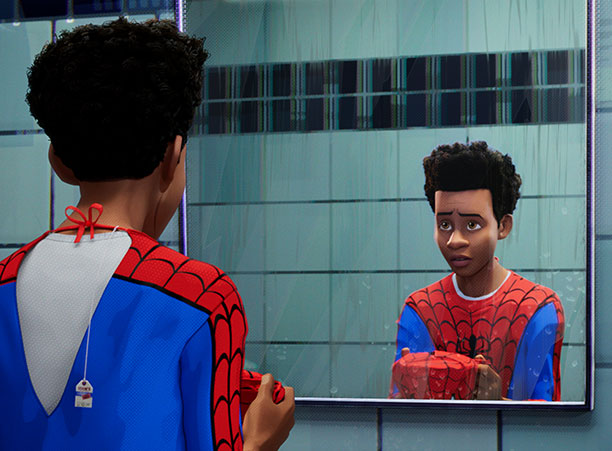
A scene from "Spider-Man: Into the Spider-Verse"

The College of the Holy Cross will be featuring the following films in Seelos Theater this spring. All films are free and open to the public.

“Leave No Trace”
Wed., Jan. 23: Showings at 3 and 8 p.m. Rated PG. Starring Thomasin McKenzie, Ben Foster and Jeffrey Rifflard. A father and his thirteen-year-old daughter are living an ideal existence in a vast urban park in Portland, Oregon, when a small mistake derails their lives forever.

“Coco”
Fri., Jan. 25 and Sat., Jan. 26: Showing at 7 p.m. Rated PG. Starring Anthony Gonzalez and Gael García Bernal. Aspiring musician Miguel, confronted with his family’s ancestral ban on music, enters the Land of the Dead to find his great-great-grandfather, a legendary singer.

“The Sisters Brothers”
Wed., Jan. 30: Showings at 3 and 8 p.m. Rated R. Starring John C. Reilly, Joaquin Phoenix and Jake Gyllenhaal. In 1850s Oregon, a gold prospector is chased by the infamous duo of assassins, the Sisters brothers.

“Deadpool 2”
Fri., Feb. 1 and Sat., Feb. 2: Showing at 7 p.m. Rated R. Starring Ryan Reynolds, John Brolin and Morena Baccarin. Foul-mouthed mutant mercenary Wade Wilson (A.K.A. Deadpool), brings together a team of fellow mutant rogues to protect a young boy with supernatural abilities from the brutal, time-traveling cyborg, Cable.

“Bad Times at the El Royale”
Wed., Feb. 6: Showings at 3 and 8 p.m. Rated R. Starring Jeff Bridges, Cynthia Erivo and Dakota Johnson. Circa 1969, several strangers, most with a secret to bury, meet by chance at Lake Tahoe’s El Royale, a rundown hotel with a dark past. Over the course of one night, everyone will show their true colors – before everything goes to hell.

“Sicario: Day of the Soldado”
Fri., Feb. 8 and Sat., Feb. 9: Showing at 7 p.m. Rated R. Starring Benicio Del Toro and Josh Brolin. The drug war on the U.S.-Mexico border has escalated as the cartels have begun trafficking terrorists across the U.S. border. To fight the war, federal agent Matt Graver re-teams with the mercurial Alejandro.

“BlacKkKlansman”
Wed., Feb. 13: Showings at 3 and 8 p.m. Rated R. Starring John David Washington and Adam Driver. Ron Stallworth, an African American police officer from Colorado Springs, Colorado, successfully manages to infiltrate the local Ku Klux Klan branch with the help of a Jewish surrogate who eventually becomes its leader. Based on actual events.

“Mission: Impossible – Fallout”
Fri., Feb. 15 and Sat., Feb. 16: Showing at 7 p.m. Rated PG-13. Starring Tom Cruise and Henry Cavill. Ethan Hunt and his IMF team, along with some familiar allies, race against time after a mission gone wrong.

“Colette”
Wed., Feb 20: Showings at 3 and 8 p.m. Rated R. Starring Keira Knightly and Fiona Shaw. Colette is pushed by her husband to write novels under his name. Upon their success, she fights to make her talents known, challenging gender norms.

“The Hate U Give”
Fri., Feb. 22 and Sat., Feb 23: Showing at 7 p.m. Rated PG-13. Starring Amandla Stenberg and Regina Hall. Starr witnesses the fatal shooting of her childhood best friend Khalil at the hands of a police officer. Now, facing pressure from all sides of the community, Starr must find her voice and stand up for what’s right.

“A Private War”
Wed., Feb. 27: Showings at 3 and 8 p.m. Rated R. Starring Tom Hollander and Rosamund Pike. One of the most celebrated war correspondents of our time, Marie Colvin is an utterly fearless and rebellious spirit, driven to the frontline of conflicts across the globe to give voice to the voiceless.

“A Star is Born”
Wed., March 13: Showings at 3 and 8 p.m. Rated R. Starring Lady Gaga and Bradley Cooper. A musician helps a young singer find fame, even as age and alcoholism send his own career into a downward spiral.

“Eighth Grade”
Fri., March 15 and Sat., March 16: Showing at 7 p.m. Rated R. Starring Elsie Fisher and Josh Hamilton. An introverted teenage girl tries to survive the last week of her disastrous eighth grade year before leaving to start high school.

“The Shoplifters”
Wed., March 20: Showings at 3 and 8 p.m. Unrated. Starring Joe Wakeman. A series of tableaux depicting the follies of a group of naïve Marxist would-be radicals who think that they want to be revolutionaries, but in the final analysis, what they really want is to be seen wearing berets.

“Crazy Rich Asians”
Fri., March 22 and Sat., March 23: Showing at 7 p.m. Rated PG-13. Starring Constance Wu, Henry Holding and Michelle Yeoh. This contemporary romantic comedy, based on a global bestseller, follows native New Yorker Rachel Chu to Singapore to meet her boyfriend’s family.

“Mary Queen of Scots”
Wed., March 27: Showings at 3 and 8 p.m. Rated R. Starring Saoirse Ronan and Margot Robbie. Mary Stuart’s attempt to overthrow her cousin Elizabeth I, Queen of England, finds her condemned to years of imprisonment before facing execution.

“First Man”
Fri., March 29 and Sat., March 30: Showing at 7 p.m. Rated PG-13. Starring Ryan Gosling and Claire Foy. A look at the life of the astronaut, Neil Armstrong, and the legendary space mission that led him to become the first man to walk on the Moon on July 20, 1969.

“Widows”
Wed., April 3: Showings at 3 and 8 p.m. Rated R. Starring Viola Davis and Michelle Rodriguez. Set in contemporary Chicago, amid a time of turmoil, four women with nothing in common except a debt left behind by their dead husbands’ criminal activities, take fate into their own hands, and conspire to forge a future on their own terms.

“Creed II”
Fri., April 5 and Sat., April 6: Showing at 7 p.m. Rated PG-13. Starring Michael B. Jordan, Sylvester Stallone and Tessa Thompson. Under the tutelage of Rocky Balboa, heavyweight contender Adonis Creed faces off against Viktor Drago, son of Ivan Drago.

“On The Basis of Sex”
Wed., April 10: Showings at 3 and 8 p.m. Rated PG-13. Starring Felicity Jones, Armie Hammer and Justin Theroux. The story of Ruth Bader Ginsburg, her struggles for equal rights, and what she had to overcome in order to become a U.S. Supreme Court Justice.

“Green Book”
Fri., April 12 and Sat., April 13: Showing at 7 p.m. Rated PG-13. Starring Viggo Mortensen and Mahershala Ali. A working-class, Italian-American bouncer becomes the driver of an African-American classical pianist on a tour of venues through the 1960s American South.

“If Beale St. Could Talk”
Wed., April 24: Showings at 3 and 8 p.m. Rated R. Starring KiKi Layne, Stephan James and Regina King. A woman in Harlem embraces her pregnancy while she and her family struggle to prove her fiancé innocent of a crime.

“Spider-Man: Into the Spider-Verse”
Fri., April 26 and Sat., April 27: Showing at 7 p.m. Rated PG. Starring Shameik Moore, Jake Johnson and Hailee Steinfeld. Teen Miles Morales becomes Spider-Man of his reality, crossing his path with five counterparts from other dimensions to stop a threat for all realities.

“The Favourite”
Wed., May 1: Showings at 3 and 8 p.m. Rated R. Starring Olivia Colman, Emma Stone and Rachel Weisz. In early 18th century England, a frail Queen Anne occupies the throne and her close friend, Lady Sarah, governs the country in her stead. When a new servant, Abigail, arrives, her charm endears her to Sarah.

“Fantastic Beasts: The Crimes of Grindelwald”
Fri., May 3 and Sat., May 4: Showing at 7 p.m. Rated PG-13. Starring Eddie Redmayne, Katherine Waterston and Dan Fogler. The second installment of the “Fantastic Beasts” series featuring the adventures of Magizoologist Newt Scamander.

All synopses courtesy of IMDB.com

For additional information, please contact Seelos Box Office at 508-793-2455.
Posted in News, Seelos Theater | Comments Off on Holy Cross’ Spring 2019 Seelos Film Series

Justice, Equality and Immigration: Holy Cross Alumnus Offers Free Legal Advice to Undocumented College Students

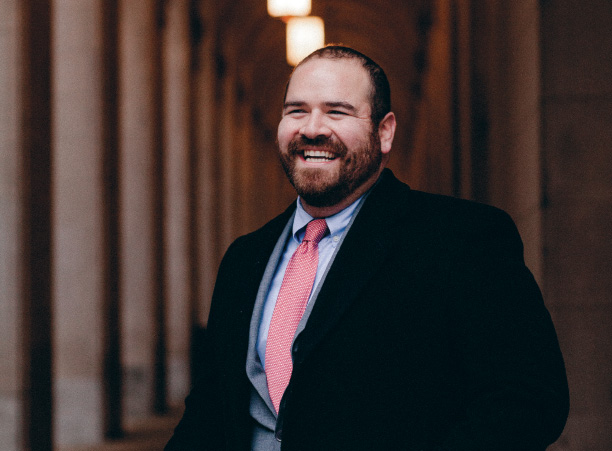
Jason Hernandez '07 laughs while standing in the streets of PhiladelphiaWhen Jason Hernandez ’07 arrived on Mount St. James in fall 2003, he wasn’t sure what he wanted to major in or which career he might be interested in after graduation. But he did know, he says, that he wanted to learn how to live well.
“I decided I would spend time figuring out what I wanted my life to be about, so I majored in philosophy,” he says. “Holy Cross was a great place to experiment with what leadership meant, and thinking about things that you saw and wanted to change.”

These days, living well for Hernandez means serving as an immigration attorney, leading the Rutgers Immigrant Community Assistance Project (RICAP) at Rutgers, the State University of New Jersey.

Hernandez grew up on Long Island, New York, where his father was an immigrant from Guatemala who ran a food truck business. But he says his path to immigration law isn’t as simple as the son of an immigrant wanting to help others in similar situations. His desire grew out of questions about justice, equality and the legal system, first piqued at Holy Cross as a member of SPUD, the Latin American Student Organization and the Student Government Association and, later, as a volunteer with the Jesuit Volunteer Corps in West Los Angeles after graduation. He worked at Chrysalis, an organization that helps people reenter the workforce after homelessness, incarceration or substance abuse problems.

“I found that work fulfilling in many ways, but it was tough, too. I would assist people in finding employment, and then maybe the background check would reveal some additional information and the employer would let them go. Then they would ask me what they could do or if they had any rights,” he says. “It got me thinking about social justice and how the legal system isn’t equal for all.”

Hernandez decided to enroll in law school at Temple University in Philadelphia, where a fellowship at HIAS Pennsylvania turned into a full-time job. He worked at the nonprofit, which helps immigrants and refugees navigate U.S. immigration, for five and a half years.

When Hernandez saw that Rutgers was creating an office to assist immigrants on campus, he jumped at the chance to get involved. He estimates that the school is one of two or three universities on the East Coast that has created dedicated, full-time attorney positions to specifically represent immigrant and undocumented students in immigration matters. New Jersey has offered in-state tuition rates to students who are not U.S. citizens since 2015; in 2018, it expanded to offer financial aid as well, which has increased the population of undocumented students on the university’s three campuses across the state.

Hernandez says Rutgers created his position and the RICAP because of this change, coupled with the anti-immigration policies implemented by the Trump administration. In particular, students expressed distress over the uncertain future of the country’s undocumented youth and the Deferred Action for Childhood Arrivals (DACA) program. DACA provided work permits and deportation protection to eligible immigrant youth who came to the U.S. when they were children, which enabled them to obtain jobs and apply to college.

Posted in Holy Cross Magazine, News, Philosophy, Winter 2019 | Comments Off on Justice, Equality and Immigration: Holy Cross Alumnus Offers Free Legal Advice to Undocumented College Students

A Holy Cross Without Fenwick and O’Kane?

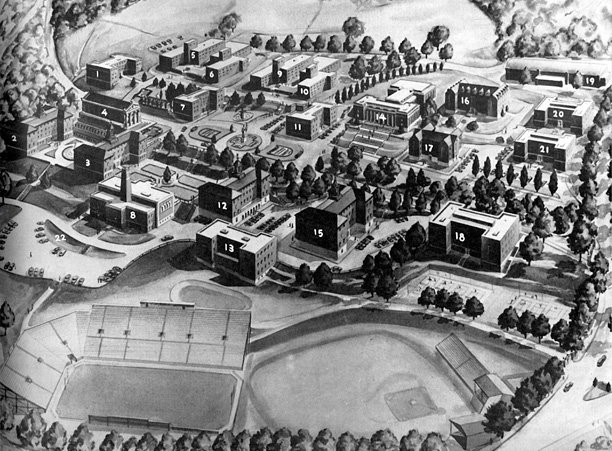
A photo from 1955 showing what the Holy Cross campus could look like in the future

It’s nearly impossible to imagine Mount St. James without the iconic spires of Fenwick and O’Kane halls, but that’s exactly what a 1955 master plan predicted — and argued was inevitable.

A Dec. 15, 1955, story published in The Crusader outlines the campus’ future via a master plan devised by architect Cornelius W. Buckley ’29 and presented to the public by Rev. William A. Donaghy, S.J., the College’s 27th president (1954- 1960).

“It is necessary,” Fr. Donaghy said, “to have a specific plan for all future building if the campus is to have any proportion.” The article stated the “dream campus” would “be cruciform with the main axis along Linden Lane to the chapel, and the minor axis from Kimball Hall to Dinand Library.” With nothing beyond Dinand, save for the already 8-year-old Field House, this proposal would have eliminated today’s upper campus, which has been home to the majority of new construction for past decades.

Under the eye-catching statement “O’Kane Will Tumble,” the article explained why the College’s most famous buildings would not see much of the 21st century. “These buildings contain no steel, and as Fr. Donaghy put it, ‘we have to face the reality that they won’t stand forever,'” wrote author Bill Kennedy ’58. “We do expect them to last for another fifty or sixty years, however.” The plan called for Fenwick and O’Kane to be replaced by two residence halls and an administration building (numbers 9, 10 and 11).

The article noted a student union was “the most pressing need.” “The natural location for the structure would be the area between Kimball Hall and Fitton Field,” Fr. Donaghy said. It would include “a gymnasium, student recreation facilities and probably either a swimming pool or a skating rink.” Also slated to be built near the proposed student union — a new field house. The plan called for the Field House to be replaced by an “intramural The Plan for a Holy Cross Without Fenwick and O’Kane I gym” in the same footprint.

However, despite a student union being viewed as a priority, that didn’t mean it would be built first due to “the increasing need for science facilities.” According to the article, “a new science building is proposed, modeled after the Biology Building (editor’s note: You know the “Biology Building” as O’Neil Hall; it was renamed in 1959). A new science building would be located between Biology (O’Neil) and the Field House. Both the science building and the student union are planned for the near future.”

The “student union” arrived 12 years later in the form of Hogan Campus Center, notably on the opposite end of campus from the plan and beyond the proposed map. The “science building” would be realized in 1959 as Haberlin Hall, named after Monsignor Richard J. Haberlin, class of 1906, former vicar-general of the Archdiocese of Boston and president of the College’s then General Alumni Association at the time of his death. Swords Hall would follow in 1985 and Smith Laboratories in 2009, with the entire Integrated Science Complex opening in 2010.

The article noted: “The new campus is a long-range project. Although work may begin within a few years, Fr. Donaghy noted that all of the proposed buildings will not be completed ‘in my lifetime and perhaps not in yours.'”

For a further description of Fr. Donaghy’s building plans and more history behind them, see Pages 323-324 in “Thy Honored Name: A History of the College of the Holy Cross (1843-1994)” by Rev. Anthony J. Kuzniewski, S.J.


Written by Melissa Shaw for the Winter 2019 issue of Holy Cross Magazine.

About Holy Cross Magazine
Holy Cross Magazine (HCM) is the quarterly alumni publication of the College of the Holy Cross. The award-winning publication is mailed to alumni and friends of the College and includes intriguing profiles, make-you-think features, alumni news, exclusive photos and more. Visit magazine.holycross.edu/about to contact HCM, submit alumni class notes, milestones, or letters to the editor.

Posted in Holy Cross Magazine, News, Winter 2019 | Comments Off on A Holy Cross Without Fenwick and O’Kane?

For Us, For Others, For Action: Alumni Reflect on a Half-Century of the Black Student Union

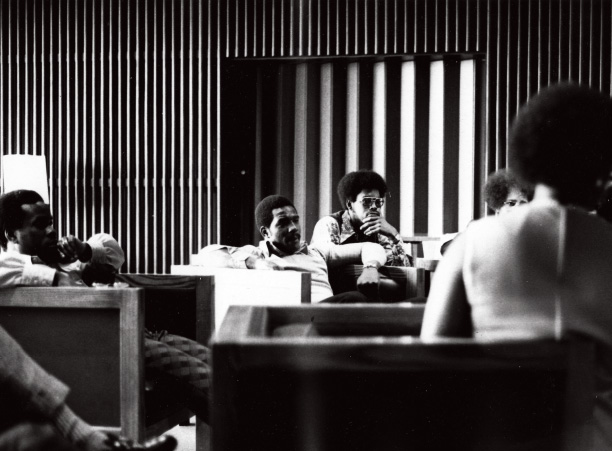
Members of the BSU circa 1970 sit together in chairs

It was Spring 1987 and high school senior Arnold Principal was lost.

He arrived on Mount St. James for a campus visit, got separated from his host and unknowingly stumbled upon the Black Student Union-sponsored Spring Talent Show.

“Two BSU members immediately recognized that I was not a current student and seemed lost,” he remembers. “That night, they made sure I had a great time at the event and hosted me in their dorm. Not only did I join the BSU that fall, but I also performed twice in the talent show the following spring.”

Today a proud alumnus of the class of 1991, Principal recognizes the impact of that happy accident and how it changed his life: “I credit coming to Holy Cross to its students and that one particular event.” Changing lives, taking action, finding lost students (usually figuratively, but in this case, literally) — and inviting them into a welcoming community of shared experience is a common thread that spans the history of the BSU, which celebrated its 50th anniversary in 2018.

A Place to Find Community

“Prior to 1968, there were very few black students on campus,” notes Arthur “Art” Martin Jr. ’70, first BSU president. He arrived on campus in 1966, one of two black students in a freshman class of 600. “You may have had eight to 10 black students, so there wasn’t any organization or safety net for the number of students who came on board.”

In the wake of the April 1968 assassination of Martin Luther King Jr., Rev. John E. Brooks, S.J., ’49, then academic vice president and dean of the College, took his now-famous road trip up and down the East Coast to recruit more students of color, an effort to better diversify the student body. That fall, 19 black students arrived at Holy Cross, and while they greatly bolstered the minority numbers on campus, they were still a tiny percentage of a nearly all-white institution, which was jarring for many of them — and their new classmates.

“As much as the black students didn’t know the white students, the white students didn’t know the black students,” Martin says. “There were a lot of cultural differences going on back then, even down to the music that people listened to, the way people danced. It was a whole cultural shock for some.”

Notes Theodore V. “Ted” Wells Jr. ’72, who was recruited by Fr. Brooks and later became the BSU’s second president: “When we arrived on campus, I dare say that Holy Cross was not ready for us and we were not ready for Holy Cross.”

Posted in Holy Cross Magazine, News, Psychology, Winter 2019 | Comments Off on For Us, For Others, For Action: Alumni Reflect on a Half-Century of the Black Student Union

Five Outstanding Alumni Receive Sanctae Crucis Awards

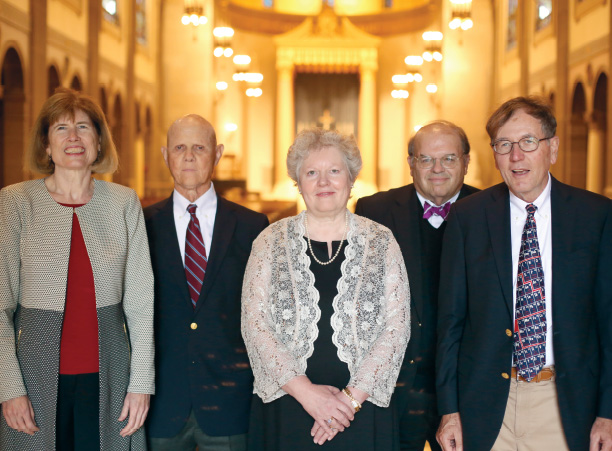
Mary Beth Sheridan ’83, Arthur Weyman ’62, Barbara Tylenda ’79, Richard Leon ’71 and Gus Caffrey ’73 stand at the entrance of St. Joseph Memorial Chapel.They graduated years apart, yet each embraces the Jesuit magis, a calling to “be more” that has fueled Holy Cross men and women throughout the decades and around the world. Determined to live lives of purpose and impact, these alumni have leveraged their success, influence and expertise to support truth, justice and equality of opportunity. They include:
  • A world-renowned nuclear physicist and pioneering researcher who stands as a testament to the great power, significant value and expansive sweep of a liberal arts education.
  • A courageous, passionate and uncompromising foreign journalist who uses her voice and frontline presence to report with clarity and conscience from global hotspots.
  • An independent and impartial federal judge who speaks truth to power in rulings as historic as they are complex.
  • An unequalled advocate, practitioner and educator who supports the most vulnerable children among us.
  • A visionary physician and researcher who saw the life-saving potential of technology for detecting heart disease and transformed medical training, patient care and cardiac outcomes.

On Sept. 21, Augustine J. Caffrey, Ph.D. ’73, Mary Beth Sheridan ’83, Hon. Richard J. Leon ’71, Barbara Tylenda, Ph.D., ABPP ’79 and Arthur E. Weyman, M.D., ’62 were honored as recipients of the 21st Sanctae Crucis Awards, the highest non-degree honor the College bestows on alumni who have distinguished themselves professionally and dedicated their lives to justice in a variety of ways.

While their backgrounds and fields are varied, all five recipients share a common foundation on Mount St. James, one that has influenced their journey in unexpected ways.

Posted in Chemistry, English, Holy Cross Magazine, Mathematics and Computer Science, News, Physics, Psychology, Visual Arts, Winter 2019 | Comments Off on Five Outstanding Alumni Receive Sanctae Crucis Awards

Two Alumni, Political World Veterans Teach Course Examining Politics From Inside-Out

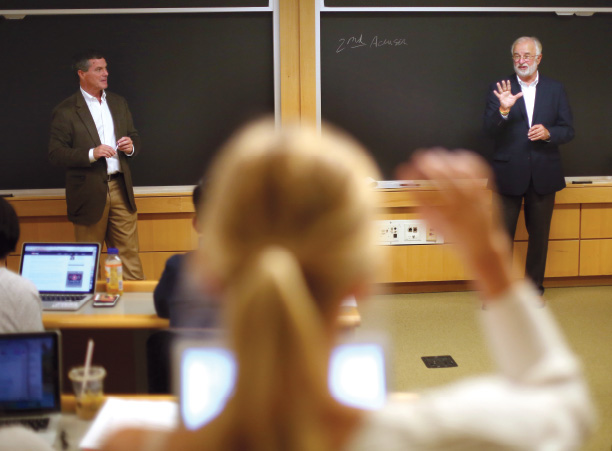
Peter Flaherty '87 and Tim Bishop '72 stand at the front of the classroom

The advertisement starts with a video of Hillary Clinton on stage. “If you look at the map of the United States, there’s all that red in the middle where Trump won,” she says. The video is intercut with images of Missouri’s Democratic Senator Claire McCaskill proudly endorsing Clinton, as Clinton goes on to describe Trump supporters as racist and sexist. The kicker flashes in block red letters on screen: “This is what Claire McCaskill and her ‘President’ think of you.” It ends with the logo for Josh Hawley, McCaskill’s Republican opponent in the 2018 midterms.

“Who thought that was a very powerful ad?” asks former Democratic congressman Timothy “Tim” Bishop ’72, standing in front of a Smith Labs lecture hall of more than 20 Holy Cross students. Nearly every hand goes up. He agrees: “I thought that was a very powerful ad.”

“A lot of this stuff is poll-driven,” explains Peter Flaherty ’87. “The strategists sitting in the room got a poll back that tested Hillary Clinton’s favorability in the state of Missouri, and that’s the reason an ad like this got put on the air.” He should know — as a longtime political consultant, he’s run campaigns for Mitt Romney, Scott Brown and other Republican candidates, often being the one to make decisions about what ads to air and where to spend resources.

Students in the Academic Internship Program course Campaign 2018: A Hands-On Approach spent the fall semester combining hands-on learning as interns in area local, state and national political campaigns with a weekly seminar co-taught by Bishop and Flaherty. In addition to getting real-world experience in races culminating in the November midterms, the students had the ear and expertise of two veterans of the national political scene.

Posted in History, Holy Cross Magazine, J.D. Power Center for Liberal Arts in the World, News, Political Science, Winter 2019 | Comments Off on Two Alumni, Political World Veterans Teach Course Examining Politics From Inside-Out

‘Summa’ Exhibition Showcases Work of Visual Arts Faculty

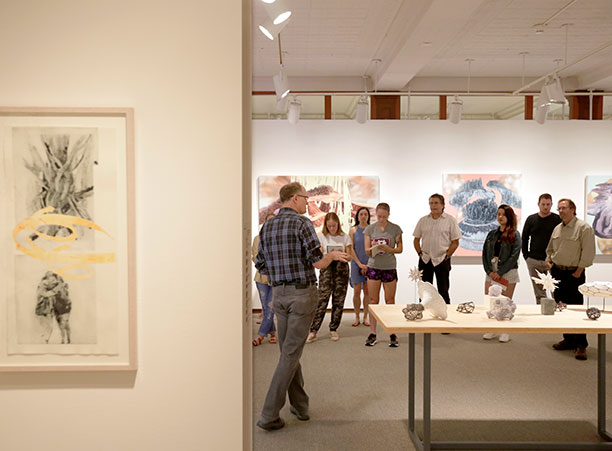
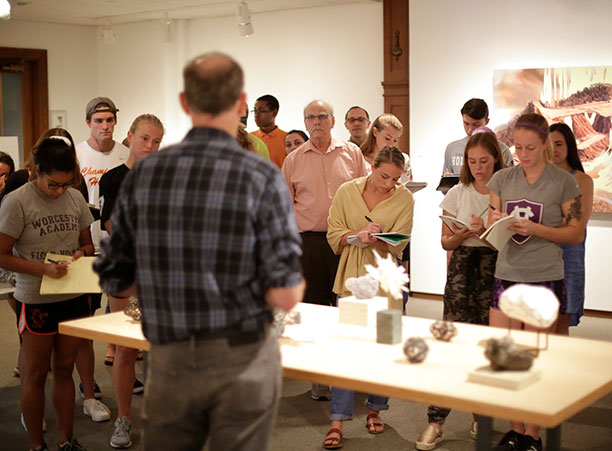
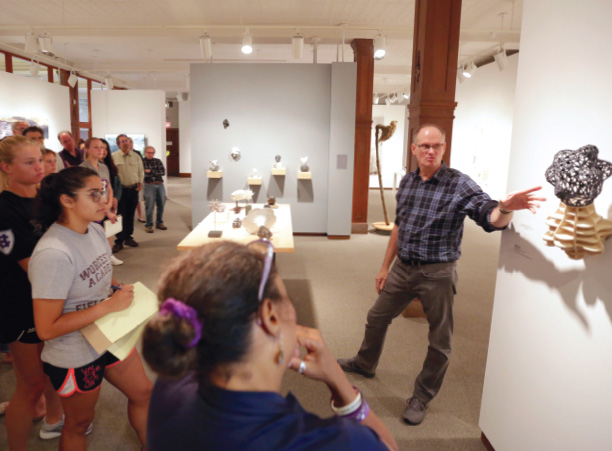
Michael Beatty shows students his hybrid sculptures during the "Summa" art exhibition

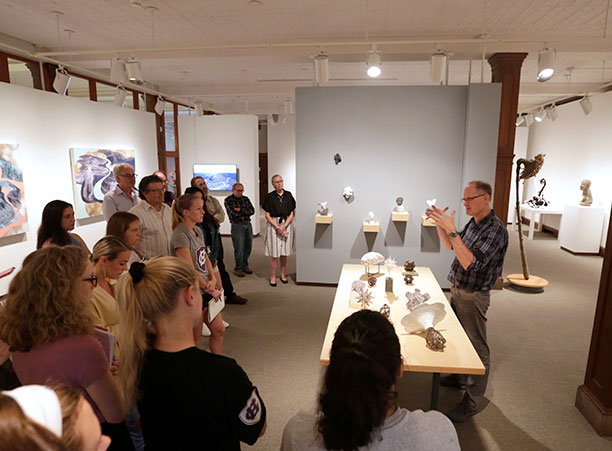
Scattered across a table built using the golden ratio were a series of small-scale hybrid sculptures created by Associate Professor Michael Beatty. His work, a mix of handmade and digitally printed forms, was among the artwork featured in “Summa,” an Iris and B. Gerald Cantor Art Gallery fall exhibition that showcased new work by the eight artists who make up Holy Cross’ visual arts faculty: Beatty, Rachelle Beaudoin, John Carney, Matthew Gamber, Victor Pacheco, Cristi Rinklin, Susan Schmidt and Leslie Schomp.

A quick scan of the gallery revealed the scope of the faculty’s mastery, represented through media that included photography, painting, digital media and printmaking. To augment the exhibition, each artist-educator led a demonstration inviting students and the wider community into their process of creation.

“I’m interested in the intersection of art and science — the two things that I loved when I was your age in school,” Beatty shared with students gathered around his work in the gallery. His sculptures, small enough to fit in one hand and resembling organic forms, heavily incorporate elements created using 3-D printing technology. In the ideation stage, Beatty draws his forms on the computer, often starting with mathematical figures.

“I’m in awe of the way that math can become this sort of window through which we can see the world, but I also realize that our lived experience is very different from the sort of rigid rules of mathematics. We see the world and there is pain and suffering; there is wonder and awe,” Beatty explained. “In a funny way, I’m trying to use this mathematical model to look at something very different — to give ideas physical form.”

Some of Beatty’s work in “Summa” — like one 3-D sculpture that was filled in with plaster rather than left open and porous like much of his work — was created during his recent sabbatical when, he explained, he had the rare opportunity and space to experiment.

“I think it was just playing in the studio, to be honest with you,” he shared about the solid form. “I got bored one day and started filling in the thing. It’s been a long time since I’ve had that kind of time to devote to the studio. And it’s amazing, for those of you who are studio art students here, the idea of playing. Have time to play, make mistakes and throw things out.”

The exhibition — held every three years — gave students and the community a rare glimpse into the creative process of the practicing visual artists who serve as educators at Holy Cross.


Written by Evangelia Stefanakos ’14 for the Winter 2019 issue of Holy Cross Magazine.

About Holy Cross Magazine
Holy Cross Magazine (HCM) is the quarterly alumni publication of the College of the Holy Cross. The award-winning publication is mailed to alumni and friends of the College and includes intriguing profiles, make-you-think features, alumni news, exclusive photos and more. Visit magazine.holycross.edu/about to contact HCM, submit alumni class notes, milestones, or letters to the editor.

Posted in Holy Cross Magazine, News, Visual Arts, Winter 2019 | Comments Off on ‘Summa’ Exhibition Showcases Work of Visual Arts Faculty

Women’s Ice Hockey Joins Elite Hockey East

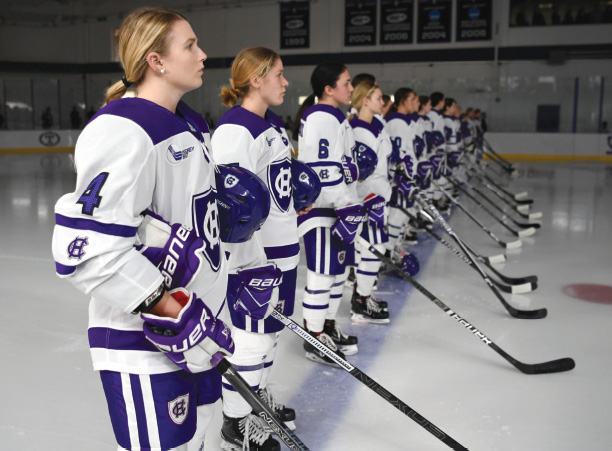
Members of the Women's Ice Hockey Team stand on the ice prior to starting a game

The newest members of hockey’s toughest conference prepare to take the ice at the team’s Hockey East home opener vs. Boston College in October. Photo courtesy of Holy Cross Athletics

Life is a lot different for head coach Peter Van Buskirk and the Holy Cross women’s ice hockey team this season. One day they’re facing the sixth-ranked team in the country, and the following week they’re right back at it, battling another top 10 squad filled with some of the nation’s best players.

It’s quite the change of pace for the team, one that just last year was playing in Division III. Now they’re a member of the toughest division in the sport: Hockey East.

The heralded 10-team conference is home to teams that regularly appear in the weekly national rankings. (Hockey East members include Northeastern University, Boston College, Merrimack College, Providence College, the University of Maine, the University of Connecticut, Boston University, the University of Vermont and the University of New Hampshire.) Last year, the Crusaders started the transition, playing a schedule that included a mix of Division I and non-Division I teams while increasing the number of games from its previous 27 to 32. This season, the team is slated to play a full 34-game Division I schedule.

The transition to Division I is a hallmark moment. “This move puts the team on the level of all other sports teams at Holy Cross,” Van Buskirk says. “This puts us at the top level of college hockey.”

According to Holy Cross Director of Athletics Nathan Pine, the move to Division I and Hockey East has been in the works for years. The process began with a look at the team’s options; Hockey East was an appealing choice based on the level of competition. Pine knew that having an association with the elite league would have numerous benefits for the program. “We wanted to elevate the women’s program and this was the first step,” he says.

The move was announced in 2016, and in order to become a member of the conference, the College had to meet a number of requirements, including increasing its scholarship limits, Van Buskirk says. Though the transition has been a lot of work, he notes it will pay off in a variety of ways, such as increased exposure, which will help with recruiting.

Posted in Holy Cross Magazine, News, Winter 2019 | Comments Off on Women’s Ice Hockey Joins Elite Hockey East

Holy Cross Alumna Empowers Young Women Through Poetry in the Mississippi Delta

Girls Write the World co-founders and counselors, including alumna Madison Walsh '12, stand together

If you’ve ever been to Mississippi in the summer, you know it is no place for the faint of heart, and you might wonder what brings me back year after year. It’s exactly that — heart — in the form of bright, fierce young women and the community we’ve built together through Girls Write the World, a girls-only literacy and youth development nonprofit.

The program was born out of my Teach for America experience. When I left Holy Cross and arrived at Delta State University following my graduation in summer 2012, I was eagerly joining hundreds of other soon-to-be teachers at Teach for America’s summer training institute in Cleveland, Mississippi. I had no idea that even the rigor of Holy Cross would not have prepared me for the challenges I faced as a first-year teacher in a community completely unfamiliar to me.

As I struggled through my first two years of teaching seventh grade English in Greenville, Mississippi, my emotions ran the gamut from despair to elation, from hopeless to optimistic. I lost and regained faith in my teaching abilities and fell in love with the community and my students. Along the way, I couldn’t help but notice my students’ lack of resources — not just books and school supplies — but spaces to grapple with sexism, racism and the challenges of girlhood; creative outlets; inspirational and informative literature; leadership opportunities; sex and health education; and college preparatory information.

At the end of my Teach for America commitment, I knew there was more work to do in Greenville. Girls Write the World was a way to address many of the concerns I was unable to tackle as a teacher and create a new, alternative space for my female students. In summer 2015, full of renewed energy, my three co-founders and I (all former English teachers) launched our inaugural summer program.

My memories from that first summer come in bursts. Sleeping in a house with no air conditioning because a gracious friend offered it for free. Hand-painting invitations to our first poetry showcase because we didn’t have access to a color printer. Driving all around town each morning and afternoon to pick up and drop off campers because we were afraid if we didn’t, they might not come.

All of those memories don’t begin to capture the overwhelming feelings of awe and gratitude when I look back at that first bumpy summer. Gratitude for the parents who trusted us, the campers who jumped in with both feet and community members who provided a free space for our campers to gather. Awe that our three essential rules — be kind, supportive and brave — and a lot of love created an incredible community that is continuing to grow.

We’ve come a long way in terms of organization and capital since that first summer, but our goals have not changed. First and foremost, we aim to create a safe space for our eighth-through 12th-grade female campers to create, explore and grow, a place where they are supported and celebrated. We do this through morning poetry workshops, where we read, discuss and analyze poetry written by women of color and write and share our own poetry. Second, we aim to provide specific, tangible resources to help our campers navigate their high school years. We do this through a variety of afternoon workshops. In the past, we’ve covered topics such as healthy relationships, mental health, sex ed, college 101, financial literacy and self-defense. We end the week with a college field trip and poetry showcase, in which campers perform their original work for family, friends and community members.

As the program continues to grow, we have turned our sights on more leadership and ownership opportunities for our campers. This past summer, we introduced two new elements: a G-Lead role, which creates a pathway for students to develop from camper to counselor, and a community day, which provides an opportunity for campers to act as counselors for a day and guide their family, friends and community members through a part of Girls Write the World’s curriculum.

Posted in Holy Cross Magazine, News, Winter 2019 | Comments Off on Holy Cross Alumna Empowers Young Women Through Poetry in the Mississippi Delta

Stranger Things: English Course Traces Gothic Tradition to Modern TV Shows and Movies

Jonathan Mulrooney speaks in front of a classroom full of students

Jonathan Mulrooney speaks in front of a classroom full of students. Photo by Tom Rettig

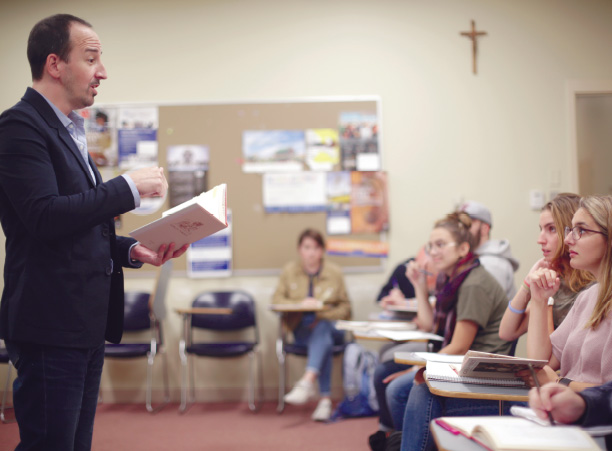
More than 120 years ago, readers huddled by the amber glow of candlelight in wide-eyed terror to devour the pages of author Bram Stoker’s Gothic tale, “Dracula.” In 2016, viewers by the millions sat in the screen-lit blue light of streaming devices or televisions to watch the Gothic-esque Netflix original thriller, “Stranger Things.” The breakout hit affirmed what English Professor Jonathan Mulrooney has long known: The Gothic is alive and well.

Mulrooney created his course, Stranger Things — Gothic Old and New, to explore this genre, asking students to consider what monsters show us about ourselves. (After all, “monster” is derived from the Latin “monstrare” — “to show.”) “It’s about inviting the students to understand in a deeper way why they’re scared, why they’re excited, and why these things are so popular,” he explains.

While the Dracula image seared into popular memory is that of the blood-sucking count, Mulrooney asks students to think through how Stoker really got under the skin of readers of his time: by twisting and challenging Victorian societal ideas on gender, sexuality, religion and technology, including a recent startling medical advance — blood transfusions.

Set in the 1980s, “Stranger Things” is a nostalgic coming-of-age tale about a group of kids investigating the supernatural while searching for their disappeared friend, and — Mulrooney points out — challenging power structures in the process.

“The Gothic is always expressing the possibility of revolutionary desire or human experiences that cannot be contained by the institutions that want to contain them,” he says. “And that’s exciting to people — even if they don’t know why.” The course explores that question. At one class, students sit with their copies of “Dracula” and volley back and forth in discussion with each other and Mulrooney. They use textual evidence from the book and historical context to explore questions of desire, religion and agency — especially for the female characters — all rooted in a study of the words on the page.

“Go to the passages and let the texts teach you how to talk about them … Always, at the center, is the word,” says Mulrooney; this is his guidance to students and his own teaching philosophy — one he draws from his first time reading “Dracula.”

“I was assigned ‘Dracula’ in my eighth-grade English class by Mrs. Moran,” he remembers. “She was such a great teacher — she would have us look up vocabulary words from ‘Dracula’ so the words were connected with something that was exciting and mattered to us. An attention to the way language works to produce imaginative effects informs my class to this day.”

This approach also resonates for Anastasia Vasko ’19, an English major with a creative writing concentration. One of her favorite parts of Mulrooney’s class is “seeing how stylistic choices on the behalf of the author reinforce the thematic meanings of the prose, poetry or film.” She’s also struck by the way “the Gothic reveals reality.”

“The monsters in these tales are not necessarily the people we would call the monsters — Frankenstein’s creature or Dracula,” Mulrooney explains.

“The scariest part of these books is the humans.”

This realization gives students a foundation to consider how modern media, including films such as “Get Out” and television series like “Buffy the Vampire Slayer,” use the roughly 250-year-old genre to come to terms with real contemporary issues of race, power and gender.

To help his students start to experience stories in a new way, Mulrooney began the course in September with a classic by “Sesame Street” writer, producer and director Jon Stone: “The Monster at the End of This Book,” which features the character of Grover warning young readers that each page turn brings them closer to the monster at the book’s end.

“It’s about the production of fear in the child. But, of course, they’re going to turn the page — this is why we watch horror movies,” Mulrooney says. “There is a dual engagement: Go forward, don’t go forward. Read more, don’t read more. The actual act of reading these texts or seeing these movies becomes an experience like the experiences they’re describing. That’s one of the reasons people love the Gothic.”

English major Bella Arostegui ’19 chose to enroll in the class because she knew the Gothic would be interesting, exciting and revelatory about human nature. “This class has shown me how imaginative and ‘unrealistic’ storytelling — stories that delve into the mysterious and sometimes magical — can often reveal our deepest truths and fears,” she says.

Mulrooney sees this imaginative jolt to the self as being at the core of the College’s liberal arts and Jesuit focus on reflection: “In the Gothic, it’s the scare that in a bodily way, makes you jump out of yourself — which is a good thing, especially if you can then think about, talk about and imagine your way into some conversations about why that just happened to you.”

It’s also why Mulrooney suggested Mary Shelley’s “Frankenstein” as the first-year book for the class of 2022: “It raises issues of: What is the human? Who do we get to decide is inside and outside the border? Who gets to decide who is inside and outside the family? These are things our students should be thinking about.

“If we do not allow ourselves to be haunted — in profound ways — by the sins of our past,” he continues, “then we will forget them.”

Posted in Creative Writing, English, Holy Cross Magazine, News, Winter 2019 | Comments Off on Stranger Things: English Course Traces Gothic Tradition to Modern TV Shows and Movies

‘A Symbol of Victory and Sign of Salvation’ Lecture Explores College’s Namesake

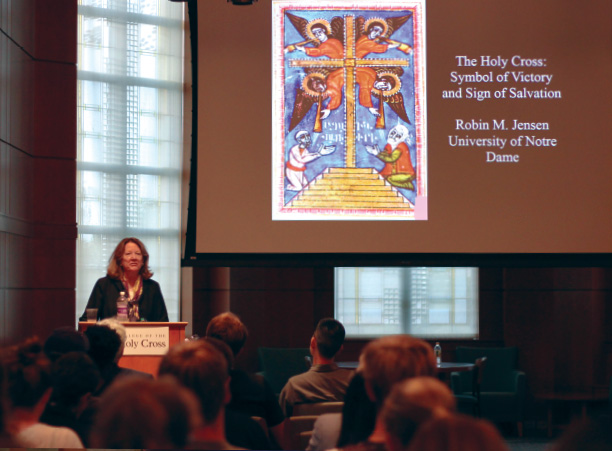
Robin Jensen speaks during a lecture on the meaning behind the imagery of the cross

Robin Jensen speaks during a lecture on the meaning behind the imagery of the cross. Photo by Hui Li

Today, images of the cross and crucifixion are synonymous with Christianity — but that has not always been the case.

“Art historians have been unable to identify an explicitly Christian crucifix prior to the fourth or even the fifth century, and then only a few rare examples before the sixth. Even a plain Christian cross symbol is virtually missing in Christian art much before the middle of the fourth century,” shared Robin Jensen, Patrick O’Brien Professor of Theology at the University of Notre Dame, at a lecture examining the history, art and meanings behind the College’s namesake a few days after the Feast of the Holy Cross.

Some scholars believe the lack of cross or crucifix imagery implies that Christians of the first three centuries were not as focused on the matter, purpose or meaning of Christ’s crucifixion, but rather on his message of love, justice and a promised paradise. Jensen disagrees.

“As a historian who works in both early Christian texts and material culture, I cannot avoid the evidence that ancient Christian writers in fact regarded the cross and Christ’s crucifixion as a core event in salvation history,” she explained. “We have extensive evidence that early Christians went about explaining, defending and even proclaiming the crucifixion.”

It wasn’t until the middle of the fourth century that an unambiguous Christian cross began to make a frequent appearance, alongside the Christogram, a symbol made up of the interlocked Greek letters chi and rho, the first two letters of Christ’s name.

Without question, the Christogram was initially associated with the Emperor Constantine, to whom the symbol appeared in a dream or waking vision just before a major military victory, Jensen shared. The use of the images spread under Constantine, who regarded the cross as his personal protective insignia. “Both the Christogram and the simple cross now start to appear in a variety of contexts that are clearly imperial and specifically military in character,” she said.

Within a few years, however, the cross and Christogram were included in scenes of the Passion story — still not showing Jesus’ crucifixion — as symbols of Christ’s victory over death, completely removed from any imperial context.

“If the cross hadn’t had the association with Constantine’s victory, it wouldn’t necessarily carry the meaning of victory,” she noted, pointing to this as a strong example of how images transform themselves.

Images of the crucifixion come into prominence after Constantine’s mother, Helena, identified the site of the crucifixion and relics of the true cross were discovered. The earliest depictions of Jesus on the cross were found within Constantine’s shrine of the Holy Sepulchre in Jerusalem, built on the site identified by his mother.

From then on, cross and crucifixion images became steady motifs within Christian visual culture. In the few centuries that followed, their presentation and associations continued to evolve. Some depictions linked Jesus’ cross to the Edenic tree of life, bringing the story of original sin full circle to salvation, while crucifixion depictions shifted from an emphasis on Christ’s victory over death to his participation in human suffering.

This changing, enriched visual repertoire, said Jensen, “expanded the possibilities and potentialities of the Holy Cross as a rich and incredibly complicated Christian symbol.”

The lecture was presented as part of the College’s ongoing celebration of its 175th anniversary and one of the Deitchman Family Lectures on Religion and Modernity, sponsored by the Rev. Michael C. McFarland, S.J. Center for Religion, Ethics and Culture.


Written by Evangelia Stefanakos ’14 for the Winter 2019 issue of Holy Cross Magazine.

About Holy Cross Magazine
Holy Cross Magazine (HCM) is the quarterly alumni publication of the College of the Holy Cross. The award-winning publication is mailed to alumni and friends of the College and includes intriguing profiles, make-you-think features, alumni news, exclusive photos and more. Visit magazine.holycross.edu/about to contact HCM, submit alumni class notes, milestones, or letters to the editor.

For more photos, history and events celebrating Holy Cross’ 175th anniversary, visit the anniversary website.

Posted in Holy Cross Magazine, News, Winter 2019 | Comments Off on ‘A Symbol of Victory and Sign of Salvation’ Lecture Explores College’s Namesake

Holy Cross Alumnus Founds Nonprofit So Every Child Can Enjoy Winter Sports

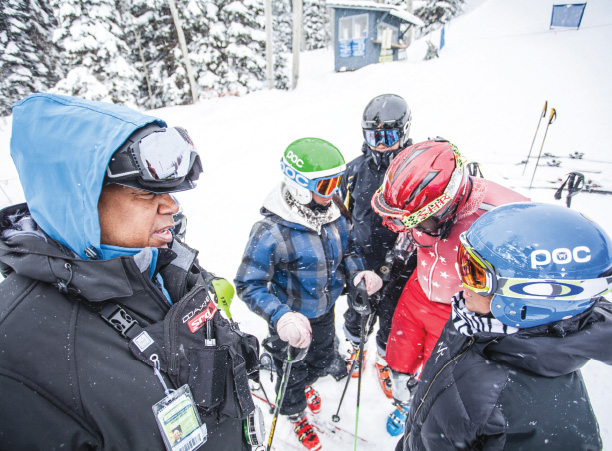
Schone Malliet coaches athletes training with the National Brotherhood of Skiers at Aspen Snowmass

Schone Malliet coaches athletes training with the National Brotherhood of Skiers at Aspen Snowmass. Photo by Andre Horton

A city kid, Schone Malliet ’74 didn’t strap on his first pair of skis until he was an adult. He’s since made up for lost time, becoming a prominent figure in the winter sports scene and taking on a mission to give all youth the outdoor winter opportunities he never had.

Bolstering a resume that could be optioned as a feature film (U.S. Marine pilot, ski-racing coach, CEO), Malliet leads a group that turned a dormant New Jersey ski area into a nonprofit whose goal is to expose urban, suburban and rural children in New York, New Jersey and Connecticut to snowboarding, as well as Nordic and alpine skiing. Malliet believes “every kid should have access — for the outdoor activity, the opportunity to excel and, hey, just for fun.”

While winter fun is a noble goal in its own right, there’s a lot more to Malliet’s National Winter Activity Center (NWAC) mission than schussing and hot chocolate. Participation in winter sports helps reduce the incidence of childhood obesity, which has reached epidemic proportions in the U.S. and is linked to diseases such as Type 2 diabetes. This form of diabetes is growing alarmingly among children and teens, according to the Centers for Disease Control and Prevention. Exercise is a key weapon in the fight against the disease, and experts say too many youth stop traditional outdoor play once winter sets in.

Persistence Pays Off

Raised in the South Bronx, Malliet notes, “I grew up on asphalt sports.” (He eventually played basketball at Holy Cross, making the team as a walk-on.) His initial exposure to skiing was less than glorious — and that’s putting it mildly. The introduction came during Marine Corps leave, when a buddy took him skiing in Park City, Utah.

How’d that go? “I had a terrible time,” Malliet says. “Promised I’d never do it again.”

But he’s hard-wired for persistence. He joined a ski club, practiced and “went from being really bad to a little better.” He got good enough to coach, eventually founding and chairing the National Winter Sports Education Foundation (NWSEF), an “enabling foundation,” as Malliet puts it, focused on gathering resources (including financing, best practices and partnerships) to introduce 100,000 urban children to winter sports.

Posted in Holy Cross Magazine, News, Winter 2019 | Comments Off on Holy Cross Alumnus Founds Nonprofit So Every Child Can Enjoy Winter Sports

Blog: McLellan ’20 Excited to (Literally) Dive Into Research in the Turks and Caicos Islands

Rachel McLellan '20

NAME Rachel McLellan ’20

HOMETOWN Cape Cod, Mass.

AREAS OF STUDY Biology major, in the Health Professions Advising Program

WHERE SHE’S STUDYING The School for Field Studies Center for Marine Research Studies in the Turks and Caicos Islands

DURATION Spring 2019

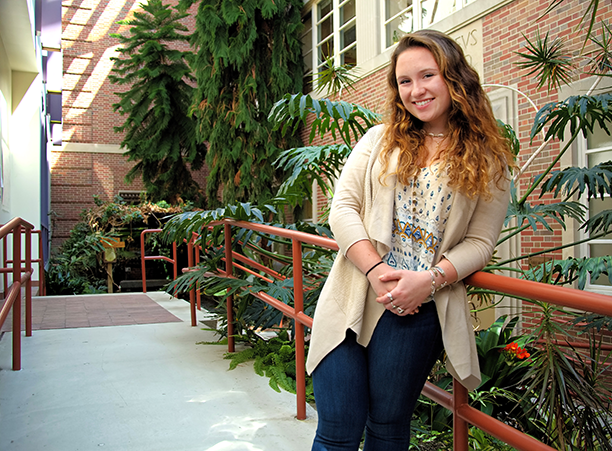
WHY SHE CHOSE THE TURKS AND CAICOS ISLANDS “I want the opportunity to (literally) dive into field studies research as a biologist in this gorgeous location. With this unique program provided by the School for Field Studies, I have the chance to explore the beauty and science that compose the nature, ocean and communities that this special island has to offer.”

WHAT SHE’S MOST LOOKING FORWARD TO “I can’t wait to learn how to scuba dive! Not only will I be learning such an amazing and exciting skill, but also it will be under the purpose of scientific investigation in a stunning place. I also am very excited to live exactly where I will be conducting research.”

WHY SHE’S BLOGGING “First, not a lot of science majors think they can study abroad and be on the pre-med track, and I’m here to prove them wrong. Second, I want to keep my friends and family updated on all of the beautiful adventures that I come across.”

Read the blog »

Related Information

Posted in Biology, Health Professions Advising, Neuroscience, News | Comments Off on Blog: McLellan ’20 Excited to (Literally) Dive Into Research in the Turks and Caicos Islands

Blog: Murray ’20 Eager to Explore Irish Culture and History During Semester Abroad

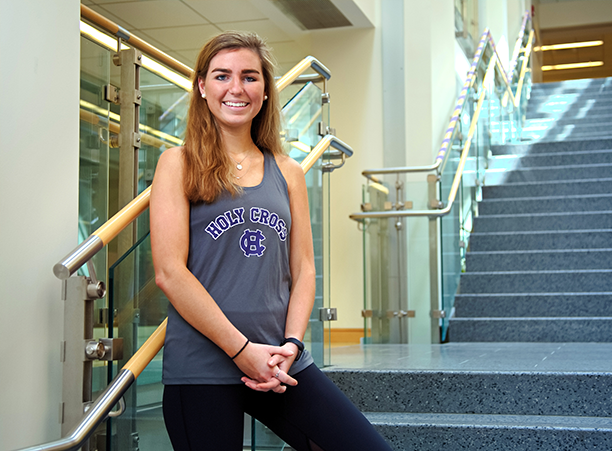
Katherine Murray '20

NAME Katherine Murray ’20

HOMETOWN Wellesley, Mass.

AREAS OF STUDY Economics major, American Sign Language and Deaf Studies minor

WHERE SHE’S STUDYING University College Dublin in Dublin, Ireland

DURATION Spring 2019

WHY SHE CHOSE IRELAND “I chose to study in Dublin because I am of Irish descent, and would love to learn more about Irish culture and history. I have heard so many good things about the people of Ireland, as well as the beautiful sights such as the Cliffs of Moher, and want to fully immerse myself in this wonderful setting.”

WHAT SHE’S MOST LOOKING FORWARD TO “I look forward to meeting some international friends and experiencing the life of a college student in Dublin. I also look forward to traveling to a few places in Europe to sightsee and try different cuisines.”

WHY SHE’S BLOGGING “I decided to blog because I did not want my short semester abroad to fly by without any documentation. I think it is important to sit down and reflect upon my recent adventures and memories so I can capture how I feel while in Dublin.”

Read the blog »

Related Information

Posted in Deaf Studies and Sign Languages, Economics and Accounting, News | Comments Off on Blog: Murray ’20 Eager to Explore Irish Culture and History During Semester Abroad

2018 at Holy Cross: A Year in Highlights

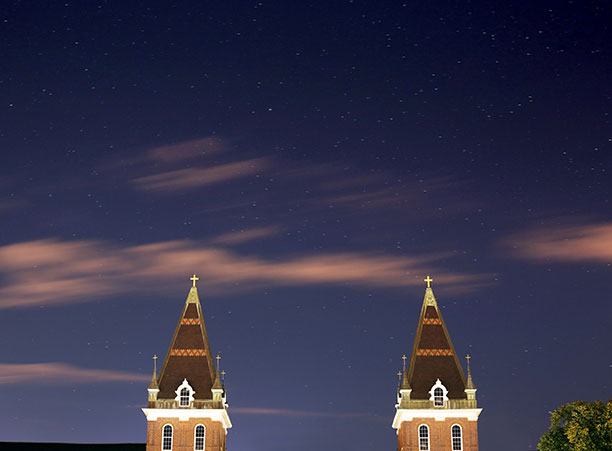
fenwick towers at duskAs 2018 comes to a close, we look back at the major accomplishments and milestones that made up the past year at Holy Cross.
Posted in Featured, In The News, News | Comments Off on 2018 at Holy Cross: A Year in Highlights

Holy Cross Professor Shares Advice on Supporting Those Grieving Opioid Epidemic Victims

Emily Campbell

Campbell

As part of her research on grief in the American opioid epidemic, Emily B. Campbell, visiting lecturer of sociology, spoke to grieving mothers who lost children to opioid addiction. In a piece written for The Conversation, she shared some advice on how to care for those who have lost loved ones to addiction, particularly during the often painful holiday season.

For example, Campbell says that using the name of the person who died can be a comfort for their loved ones.

“Names matter. One of the things that came up time and again from mothers who had lost their children to overdose was missing the sound of their child’s name,” Campbell wrote. “One mother explained the change from hearing and saying her son’s name many times a day to not hearing it spoken at all. For her, the difference between, ‘I’m sorry for the loss of your son’ and ‘I’m sorry for the loss of Jim’ is profound.”

Read the rest of Campbell’s recommendations at The Conversation.

Posted in In The News, News, Sociology and Anthropology | Comments Off on Holy Cross Professor Shares Advice on Supporting Those Grieving Opioid Epidemic Victims

Video: Christmastime is Here at Holy Cross

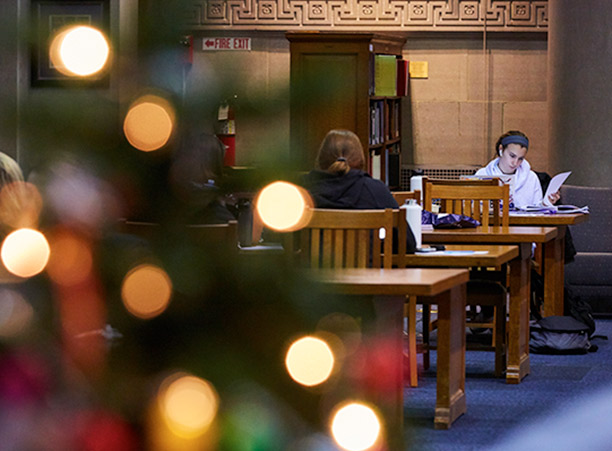
Students in the library at Christmastime

Students in the library at Christmastime

‘Tis the season for celebration! Every year at Christmastime, the College of the Holy Cross campus transforms into a winter wonderland with festive decorations, holiday concerts and campus-wide feasts. In the spirit of the holidays, the Holy Cross community — students, faculty and staff alike — came together to share the best gift they’ve ever received, from once-in-a-lifetime experiences to cherished belongings.

Rejoice in the most wonderful time of the year with us.

Posted in Featured, News, Videos | Comments Off on Video: Christmastime is Here at Holy Cross